How to Build a High-Converting Real Estate Funnel With AI

Quick Answer
What is a high-converting real estate funnel and how does it work?
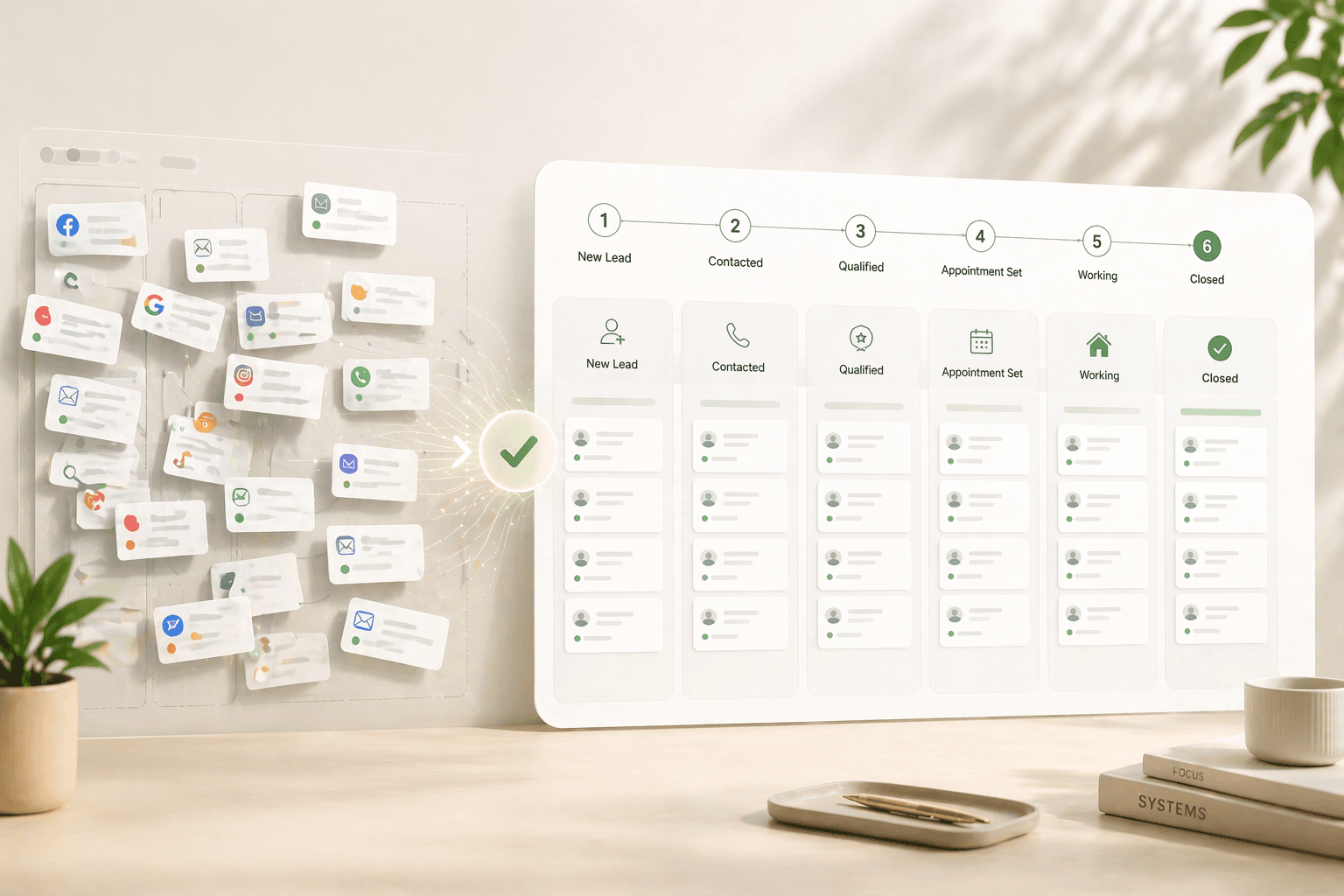
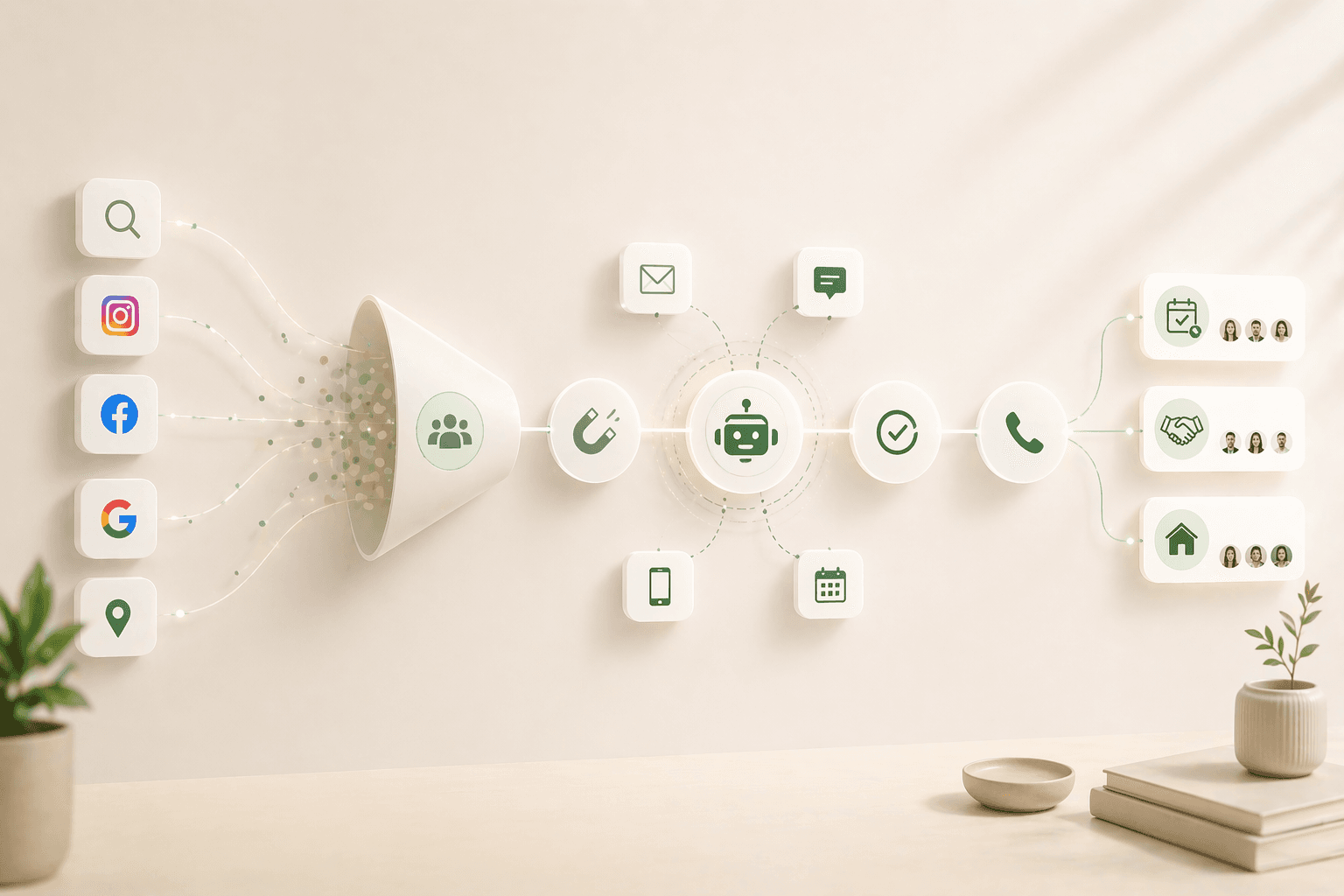
A high-converting real estate funnel is a structured, automated system that moves a prospect from first contact — typically an ad click — through qualification, follow-up, and appointment booking without requiring manual intervention at every step. It works by pairing targeted ads with fast-loading landing pages, instant AI-powered follow-up, and automated nurture sequences that keep leads warm over weeks or months. The defining factor separating high-converting funnels from average ones is response speed: leads contacted within 5 minutes are 100 times more likely to connect than those reached after 30 minutes, per MIT research published in Harvard Business Review.
Key Takeaways
- Leads contacted within 5 minutes are 100x more likely to connect than those reached after 30 minutes, per MIT's Lead Response Management Study led by Dr. James Oldroyd.
- The average real estate agent attempts fewer than 2 follow-up touches per lead; research by Velocify shows it takes 6 or more attempts to convert most prospects.
- According to NAR's 2024 Profile of Home Buyers and Sellers, 96% of buyers used the internet in their home search — meaning your funnel's digital entry points are non-negotiable.
- Conversational landing page chatbots can lift form completion rates by 40% or more compared to static forms, based on data from Drift's State of Conversational Marketing report.
- Agents who use a structured nurture sequence close 47% more leads over time than those relying on ad-hoc follow-up, according to research aggregated by InsideSales.com.
A buyer's agent in Austin spent $1,800 on Facebook leads in a single month and booked zero appointments. The leads were real — names, phone numbers, emails all verified. The problem was her follow-up: her first call came an average of 4 hours after submission, and she attempted contact twice per lead before moving on. By the time she called, most prospects had already booked a consultation with an agent who responded in under 10 minutes. She wasn't losing at the ad stage. She was losing at the follow-up stage, which is exactly where most real estate funnels collapse.
This guide breaks down every stage of a real estate funnel — ads, landing pages, the five-minute follow-up window, appointment booking, long-term nurture, and analytics — and shows you exactly what to do at each one. You will finish this article with a clear, implementable blueprint for a system that captures leads from paid traffic and organic search, qualifies them automatically, and books appointments without manual effort at every touchpoint.
The Ad Stage: How to Capture Attention That Converts
Most real estate ads fail not because the targeting is wrong but because the message tries to speak to everyone. The ads that convert speak to a specific moment: a growing family running out of space, a couple whose last child just left for college, an investor watching interest rates and calculating cap rates. People don't randomly decide to buy or sell — they arrive at that decision through a sequence of life events, and your ad's job is to intercept that sequence at exactly the right moment.
The structure of a high-converting real estate ad is simple: a single emotional hook, a clear offer, and one call to action. "See what your home is worth in today's market" outperforms "We help homeowners sell fast" because it promises a specific, personally relevant piece of information. "Stop browsing listings that are already sold" addresses a real frustration buyers experience on Zillow daily. Your hook must name the pain or the desire — not your services.
On the platform side, Facebook and Instagram remain the dominant channels for real estate lead generation, primarily because of their detailed demographic and behavioral targeting. You can reach homeowners aged 45–65 in a specific ZIP code who have shown interest in home improvement — an audience profile that correlates strongly with seller intent. Google Search ads capture lower-funnel intent; someone searching "sell my house fast in Phoenix" is further along the decision curve than a Facebook scroller. Use both channels for different funnel stages: Google for high-intent buyers and sellers, Facebook and Instagram for building a warm audience.
Stat: 96% of home buyers used the internet during their home search in 2024, up from 90% a decade earlier. — National Association of Realtors, 2024 Profile of Home Buyers and Sellers
Run at least three ad creative variations simultaneously, each targeting a distinct audience segment — first-time buyers, upsizers, and sellers — with separate messaging. Don't consolidate into one generic ad. Agents who segment their ad creative by buyer persona consistently see 20–35% lower cost-per-lead compared to those running single-message campaigns, according to internal data published by Facebook's Real Estate Vertical team. Track cost-per-lead by creative and cut underperformers at the 50-lead threshold.
Landing Pages: Converting a Click Into a Lead
A landing page has one job: turn a click into a submission. Every element on the page either supports that job or works against it. Most real estate landing pages fail at three points — they load too slowly (Google's research shows a 53% abandonment rate for pages that take longer than 3 seconds to load on mobile), they ask for too much information upfront, and they offer too little in return for that information.
The anatomy of a high-converting real estate landing page is straightforward. The headline answers the visitor's implied question within the first 3 seconds: "Find Out What Your Home Is Worth — Free Estimate in 24 Hours." The subheadline clarifies the mechanism and removes risk: "No obligation. No agent pressure. Just accurate data for your neighborhood." The form or entry point asks for the minimum viable information — name, email, and phone, nothing more at this stage. Below the fold, social proof closes skepticism: a testimonial with a full name and city, a Google review count, or a "47 homes sold in this ZIP code last year" claim anchored in real data.
Static forms convert at roughly 2–5% of page visitors in real estate, which is consistent with broader B2C lead generation benchmarks. Conversational chatbots — those that greet the visitor by name after the first entry and ask qualifying questions in dialogue format — consistently lift completion rates. Drift's State of Conversational Marketing report found that businesses using chatbots on landing pages saw form completion rates increase by 40% or more. The reason is psychological: a dialogue feels low-stakes. Filling out a form feels like signing up for something.
Stat: Pages that take longer than 3 seconds to load on mobile are abandoned by 53% of visitors. — Google/SOASTA Research, 2017 (validated repeatedly through 2023 Core Web Vitals data)
Design your landing page as a standalone experience, not an extension of your main website. Remove your navigation menu — it gives visitors a reason to leave. Remove your footer. Every link that leaves the page is a conversion leak. Your page should have exactly two exits: submit the form or close the tab. If you're running separate campaigns for buyers and sellers, build separate landing pages for each. A seller visiting a buyer-focused page will bounce immediately because the copy doesn't speak to their situation.
Why You Must Follow Up in the Five-Minute Window
The most important research ever conducted on lead conversion is a study most real estate agents have never read. Dr. James Oldroyd at MIT, in a study commissioned with InsideSales.com and published in Harvard Business Review, measured what happens to lead conversion rates as response time increases. The finding was stark: leads called within 5 minutes of submitting a form were 100 times more likely to connect and 21 times more likely to qualify compared to leads called after 30 minutes. After an hour, the odds of meaningful connection dropped to near zero.
Stat: Leads called within 5 minutes of form submission are 100x more likely to connect and 21x more likely to qualify than leads called after 30 minutes. — MIT Lead Response Management Study, Dr. James Oldroyd — Harvard Business Review, 2011
This is not a marginal difference. It's not a slight improvement that might justify some process tweaks. It is a 100x gap, which means that an agent who responds in 5 minutes is operating in a fundamentally different competitive tier than one who responds in 30 minutes, regardless of how good their services are. The reason is behavioral: the moment someone submits a form, they are at peak curiosity. They are thinking about their home, their finances, their next move. Ten minutes later, they've moved on to something else. Thirty minutes later, they're on another agent's site.
No human agent can maintain a 5-minute response rate across every lead, every day, across evenings, weekends, and holidays. This is the exact problem AI solves. An AI-powered follow-up system sends an immediate, personalized message the moment a lead submits — greeting them by name, referencing what they indicated on the form (buyer or seller, property type, timeline), and asking a qualifying question that continues the conversation. The message doesn't feel automated if it's built correctly. It feels like you were waiting for them. And while the AI holds the conversation, you get a notification that a new lead is engaged and ready for your personal attention.
Beyond the initial response, follow-up frequency matters as much as follow-up speed. Velocify's research found that calling a lead 6 times instead of 1 increases contact rates by 70%. The average real estate agent makes fewer than 2 contact attempts per lead before giving up. This means the majority of leads you pay for are abandoned after a single voicemail.
Appointment Booking: Turning Conversation Into Commitment
A lead who responds to your follow-up message is not yet a client — they're an interested prospect who hasn't committed to anything. The appointment is the commitment. It's the moment where intent becomes a scheduled obligation, and it separates leads who are browsing from leads who are buying. Getting to that appointment requires removing every possible friction point between "I'm interested" and "I've booked a time."
Manual scheduling is a friction machine. "What times work for you?" — "How about Thursday?" — "I'm busy Thursday, what about Friday?" — "Morning or afternoon?" — this back-and-forth typically takes 24–48 hours and kills momentum. A 2023 study by Calendly found that automated scheduling tools reduce time-to-appointment by 80% compared to manual coordination. That compression matters because lead interest decays over time; every extra day between initial contact and appointment is an opportunity for the lead to disengage.
The correct setup is an AI follow-up agent that, once it detects a lead is engaged and qualified, presents a direct booking link tied to your live calendar. The lead sees real-time availability, picks a slot, and receives an automated confirmation with a calendar invite and a pre-appointment reminder 24 hours before. No back-and-forth. No scheduling assistant. No calendar conflicts. If the lead no-shows, an automated re-engage message goes out within the hour offering to reschedule — not 3 days later when the moment has passed.
One practical rule for pre-appointment communication: send exactly three touchpoints between booking and the meeting. A confirmation message immediately after booking. A reminder 24 hours before. A short "see you tomorrow" message the evening before. Calendly data shows that two or more pre-appointment reminders reduce no-show rates by up to 29%. This sequence requires no effort from you once it's built.
Nurturing: The Silent Engine Behind Most Closings
The NAR 2024 report found that the average buyer takes 10 weeks from the start of their home search to making an offer. Sellers often take months longer to move from "I'm thinking about selling" to listing. This means the vast majority of leads you capture today will not be ready to transact for weeks or months. The agents who close them are not necessarily the ones who generated the lead — they're the ones who stayed present during the decision period.
InsideSales.com research found that agents using a structured, multi-touch nurture sequence close 47% more leads over time than those who follow up ad hoc. The difference is not effort — it's consistency. A nurture sequence runs on a schedule regardless of how busy you are. It shows up in the lead's inbox on day 3, day 7, day 14, day 30, and day 60. Each message is contextual: a market update for a seller lead, a new listing alert for a buyer, a mortgage rate summary for someone who mentioned financing concerns.
Stat: Agents using a structured nurture sequence close 47% more leads over 12 months than those relying on ad-hoc follow-up. — InsideSales.com Lead Management Study
The nurture sequence that works in real estate has three layers. The first is a drip email or SMS sequence — a predetermined set of messages sent on a schedule based on lead type and stage. The second layer is behavioral triggers: if a lead clicks a link in your email, that click triggers a follow-up call or a more targeted message the same day. The third layer is AI-driven personalization, where each message references the lead's specific situation — their timeline, their target neighborhood, their property type — making it feel like a one-on-one conversation rather than a mass campaign.
Build your sequences with a minimum of 12 touches over 90 days. Most agents give up after 2–3 touches. The data is clear that 80% of leads who eventually close do so after the 5th contact attempt. Your nurture sequence is your competitive advantage over every agent who calls twice and moves on.
How Pinova Automates the Full Funnel in One Platform
Pinova's Lead Intelligence Agent is the component that executes the follow-up and nurture logic described in this guide. When a lead submits a form on your Pinova-powered landing page, the system immediately dispatches a personalized SMS or email that references the lead's form inputs — buyer or seller, property type, timeline — and asks one qualifying question to continue the conversation. The agent handles multi-turn replies, escalates to you when a lead signals appointment readiness, and logs every interaction to the CRM automatically. Simultaneously, it enrolls the lead in the appropriate nurture sequence based on their type, triggering the right message at the right interval without any manual input.
Analytics: The Feedback Loop That Compounds Your Results
A funnel without analytics is a machine you can't improve. Most agents know their ad spend but don't know their cost per booked appointment — the metric that actually determines whether a campaign is profitable. Cost per lead is a vanity metric. A $6 lead that never books is worse than a $40 lead that closes a $600,000 transaction. Track funnel stages, not just entry points.
The four numbers that matter in a real estate funnel are: cost per lead by ad creative, lead-to-conversation rate (what percentage of leads respond to your first follow-up), conversation-to-appointment rate, and appointment-to-close rate. Once you have these four numbers, you know exactly where your funnel is losing money. A high cost-per-lead with a high conversion rate is a better problem than a low cost-per-lead with no conversions.
Track your average response time as a KPI. If your AI system is working, your average response time should be under 2 minutes for every lead, every day. If you're still manually following up, your average will be measured in hours. Velocify's research found that response time alone accounts for a 391% difference in contact rates between the fastest and slowest-responding agents. That gap is the entire ballgame.
Run a weekly funnel audit: check which ad creatives generated the most appointments (not just the most leads), which nurture messages had the highest reply rates, and which lead sources produced the highest close rates. These reviews take 20 minutes and compound dramatically over a quarter. Agents who do this consistently identify one optimization per week; over 12 weeks, those 12 optimizations transform a mediocre funnel into a high-performing one.
How It Feels to Run This System Daily
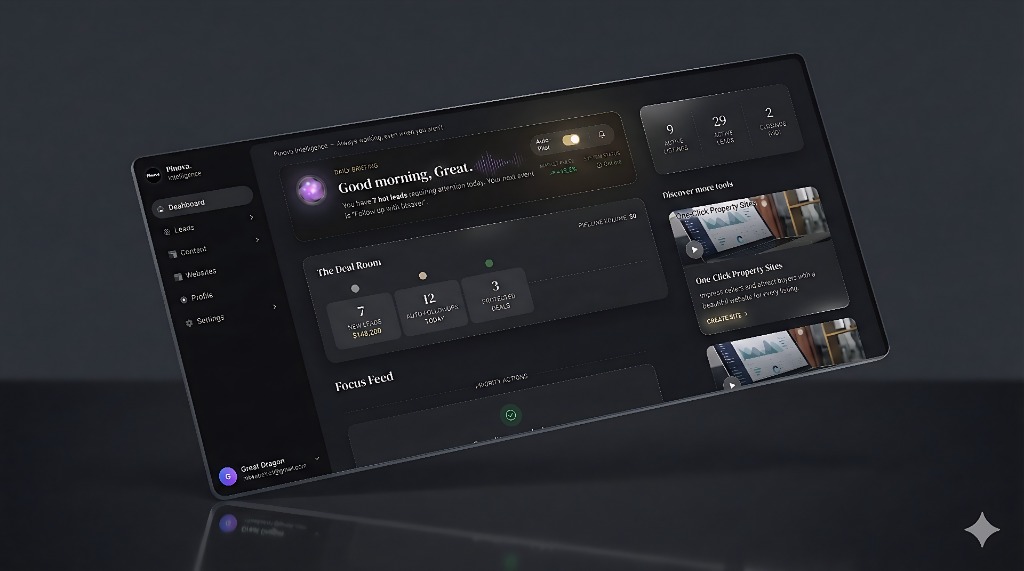
When the full funnel is operational, your morning routine changes. You open your dashboard and see three categories: leads the AI qualified overnight and flagged as appointment-ready, leads in active nurture sequences with notes on where they are in their decision timeline, and appointments already booked for the week. You didn't schedule those appointments. You didn't send follow-up messages at midnight. The system did.
Your role becomes exclusively high-value: showing up to appointments, building relationships, negotiating deals, and closing transactions. Every repetitive, time-sensitive, memory-dependent task — first responses, follow-up sequences, reminder messages, scheduling — runs in the background without your attention. The practical result is that you can handle 3–4 times the lead volume you handled manually without proportionally increasing your working hours.
This is not about replacing the human element of real estate — relationships still close deals, and clients still choose agents they trust. It's about ensuring that the leads who are ready to have that human conversation actually reach you, rather than quietly selecting another agent who responded 25 minutes faster.
The Agent Who Wins Is the One With the Stronger System
Real estate success in the next decade will not be determined by who works the most hours or spends the most on ads. It will be determined by who has the tightest funnel — the shortest gap between lead submission and first contact, the most consistent follow-up, the most persistent nurture. Every stage of the funnel described in this guide is now automatable with tools that cost less per month than a single lost lead.
The Austin agent from the opening of this article rebuilt her funnel with AI-powered follow-up. Her average response time dropped from 4 hours to 90 seconds. Her contact rate tripled. In her second month using the system, she booked 11 appointments from the same $1,800 ad spend that had previously produced zero. The ads didn't change. The leads didn't change. The funnel did.
Key Statistics: Real Estate Funnel Performance
| Key Statistic / Finding | Source & Year |
|---|---|
| Leads contacted within 5 minutes are 100x more likely to connect than those reached after 30 minutes | MIT Lead Response Management Study, Dr. James Oldroyd |
| Leads contacted within 5 minutes are 21x more likely to qualify than those reached after 30 minutes | MIT Lead Response Management Study |
| Calling a lead 6 times instead of 1 increases contact rates by 70% | Velocify Lead Management Study |
| Agents using a structured nurture sequence close 47% more leads over 12 months | InsideSales.com Lead Management Research |
| 96% of home buyers used the internet during their home search in 2024 | NAR 2024 Profile of Home Buyers and Sellers |
| 53% of mobile users abandon a page that takes longer than 3 seconds to load | Google/SOASTA Research |
| Conversational chatbots increase landing page form completion rates by 40% or more | Drift State of Conversational Marketing |
| Automated scheduling tools reduce time-to-appointment by 80% vs. manual coordination | Calendly Scheduling Efficiency Report |
| Two or more pre-appointment reminders reduce no-show rates by up to 29% | Calendly No-Show Data |
| Response time accounts for a 391% difference in contact rates between fastest and slowest agents | Velocify Speed-to-Call Study |
| 80% of leads who eventually close do so after the 5th contact attempt | InsideSales.com Follow-Up Research |
| The average buyer takes 10 weeks from the start of home search to making an offer | NAR 2024 Profile of Home Buyers and Sellers |
Frequently Asked Questions
What is the most important part of a real estate lead funnel?
Response speed is the single highest-leverage variable in real estate lead conversion. MIT research found that leads contacted within 5 minutes are 21 times more likely to qualify than those reached after 30 minutes. Every other funnel optimization — better ads, cleaner landing pages, longer nurture sequences — is secondary to getting your first follow-up out before a competitor does. If you can fix only one thing in your funnel, automate the first response.
How many follow-up attempts should I make before moving on from a real estate lead?
Most research points to a minimum of 6 attempts before categorizing a lead as unresponsive. Velocify found that agents who call 6 times achieve 70% higher contact rates than those who call once. The average agent gives up after fewer than 2 attempts, which means the majority of paid leads are abandoned prematurely. A structured sequence — day 1, day 2, day 4, day 7, day 14, day 30 — covers this automatically without relying on your memory.
What makes a real estate landing page convert better?
Three things account for the majority of conversion rate differences: page load speed (pages slower than 3 seconds lose 53% of mobile visitors per Google research), minimal form fields (ask only for name, email, and phone at first contact), and a compelling, specific offer tied to what the ad promised. Using a conversational chatbot instead of a static form can further increase completion rates by 40% or more. Remove your navigation and footer — every exit link is a conversion leak.
How long should a real estate nurture sequence run?
A minimum of 90 days with at least 12 touchpoints. NAR's data shows the average buyer takes 10 weeks from starting their search to making an offer, and sellers often take longer to commit to listing. InsideSales.com research found that 80% of leads who eventually convert do so after the 5th contact attempt. Most agents stop nurturing at 2–3 touches and surrender a large portion of their eventual closings to more persistent competitors.
Do real estate chatbots actually work for lead capture?
Yes, specifically for landing page conversion. Conversational chatbots outperform static forms because the interaction feels low-commitment — a question-and-answer dialogue rather than a form submission. Drift's research found completion rates increase by 40% or more when chatbots replace static forms. The most effective real estate chatbots greet visitors by name after the first entry, ask one qualifying question at a time, and pass the conversation to a human or CRM only when the lead is engaged.
What metrics should I track to know if my real estate funnel is working?
Track four numbers: cost per booked appointment (not cost per lead), lead-to-conversation rate, conversation-to-appointment rate, and appointment-to-close rate. Cost per lead is a misleading metric — a cheap lead that never responds costs more than an expensive lead that closes a transaction. Average response time is also a critical KPI; Velocify's research found a 391% difference in contact rates between the fastest and slowest-responding agents. If your AI is running correctly, your average response time should be under 2 minutes.
Can AI replace the human element in real estate sales?
No, and it shouldn't try to. AI is effective at time-sensitive, repetitive, and memory-dependent tasks: first responses, follow-up sequences, appointment reminders, and nurture messages. The human element — trust-building, negotiation, empathy during a stressful transaction — is where agents create irreplaceable value. The correct framing is that AI handles everything before and between human conversations so that when you do speak with a lead, you're doing so at the right moment with full context, rather than cold-calling someone who submitted a form 4 hours ago.
How do I reduce no-shows for real estate appointments?
Send exactly three pre-appointment touchpoints: an immediate booking confirmation, a reminder 24 hours before, and a short message the evening before the meeting. Calendly's data shows that two or more reminders reduce no-show rates by up to 29%. If a lead does no-show, an automated re-engagement message sent within the hour — not 3 days later — has a materially higher re-booking rate than delayed outreach. Make re-booking effortless by including a direct calendar link in the no-show follow-up.
📚 Related Reading
- What are Quick Property Pages, How they Enhance the Real Estate Website: From Static Page to Intelligent Property Experience
- How Lead Intelligence Runs Your Business While You Sleep
- How to Use AI to Respond to Every Real Estate Inquiry in Under 60 Seconds
- How to Automate Your Real Estate Follow-Up Without Sounding Like a Robot
Amaan Sheikh
— Co-Founder & CEOAmaan Sheikh is the co-founder and CEO of Pinova. He sets the product direction, builds the partnerships, and personally works with every founding partner. His focus is making enterprise-grade real estate technology accessible to ambitious agents and teams — without the enterprise price tag.