Quick Property Pages: How AI Turns Static Listings into Lead Machines

Quick Answer
What is a quick property page and how does it help real estate agents generate more leads?
A quick property page is a dedicated, single-listing website — hosted under an agent's own domain — that displays one property's photos, description, tour, floor plan, and lead capture form on a fast-loading, mobile-optimised page. Unlike a standard MLS or portal listing, the agent owns every visitor interaction: contact forms capture to their CRM, not Zillow's. AI-powered versions auto-generate the property description from listing data, embed 3D tour links, fire lead capture prompts based on visitor scroll behaviour, and route new enquiries directly to the agent's phone within seconds. Properties marketed with 3D tours receive 87% more views than those without, per industry data, and listings with video generate 403% more enquiries. The key difference from a portal listing: every lead belongs to the agent, not the platform.
Key Takeaways
- 52% of buyers found their home online in 2025 and 70% used a mobile or tablet device during their search, per NAR's 2025 Profile of Home Buyers and Sellers — making mobile page speed and visual quality the first filter every listing must pass.
- Properties marketed with 3D tours receive 87% more views than listings without them, and listings featuring video generate 403% more enquiries, per REsimpli's 2025 marketing statistics analysis.
- Listings with Matterport 3D virtual tours sell up to 31% faster and for up to 9% more on average than comparable listings without them, per a statistical analysis of 143,575 MLS listings across four US markets published by Matterport.
- A 1-second delay in mobile page load time reduces conversions by up to 20%, and 53% of mobile visitors abandon a page that takes more than 3 seconds to load, per Google's mobile speed research — making page performance a direct revenue variable for every property listing.
- 73% of homeowners say they prefer to list with an agent who uses video, and 82% of sellers say they would switch to an agent who offers 3D tours, per industry survey data — making AI-powered property pages a competitive differentiator for winning listings, not just buyer leads.
Dana Kessler, a listing agent in Denver, Colorado, spent $400 on professional photography for a $620,000 home and then published it on the MLS with a four-sentence description she wrote in 20 minutes. The listing got 47 views in its first week on Zillow. A competing agent in the same ZIP code — using an AI-generated property page with a 3D tour, neighbourhood context, and a mobile-optimised lead capture form — had a buyer submit an offer on a similarly priced home without ever setting foot inside it. That buyer, relocating from Chicago, had made the decision entirely online. Dana's listing didn't lose to a better property. It lost to a better property page.
This article explains what separates a passive listing page from an AI-powered property page that converts — the specific elements that drive more views, more enquiries, and faster offers — and why the difference matters most right now, when 52% of buyers are finding their homes online first. You'll walk away knowing exactly what your current property pages are missing, what to add, and what the data says each addition is worth in real buyer engagement.
The static page problem every agent has
The standard real estate listing page was designed for a world of desktop browsers, patient buyers, and abundant inventory. None of those conditions exist now. According to NAR's 2025 Profile of Home Buyers and Sellers, 52% of buyers found their home online and 70% conducted their search on a mobile or tablet device. The median buyer spent 10 weeks searching. That means they browsed dozens — often hundreds — of listing pages across that period, forming split-second judgments about which properties deserved a second look and which they swiped past. A page that loads slowly, shows six static photos, and contains a generic two-paragraph description fails that judgment in about four seconds.
Page speed is not a technicality — it is revenue. Google's mobile speed research found that 53% of mobile visitors abandon a page that takes more than 3 seconds to load. A 1-second delay in mobile load time reduces conversions by up to 20%. For a listing page that might receive 80 mobile visits in its first week, a 3-second load time versus a 1-second load time is the difference between engaging 80 buyers and engaging roughly 37. The other 43 left before your photos even loaded. This is not a niche technical problem. It is the baseline expectation gap between what most agent websites deliver and what buyers now require.
Stat: 53% of mobile visitors abandon a page that takes more than 3 seconds to load. A 1-second delay in mobile load time reduces conversions by up to 20%. — Google Mobile Speed Research
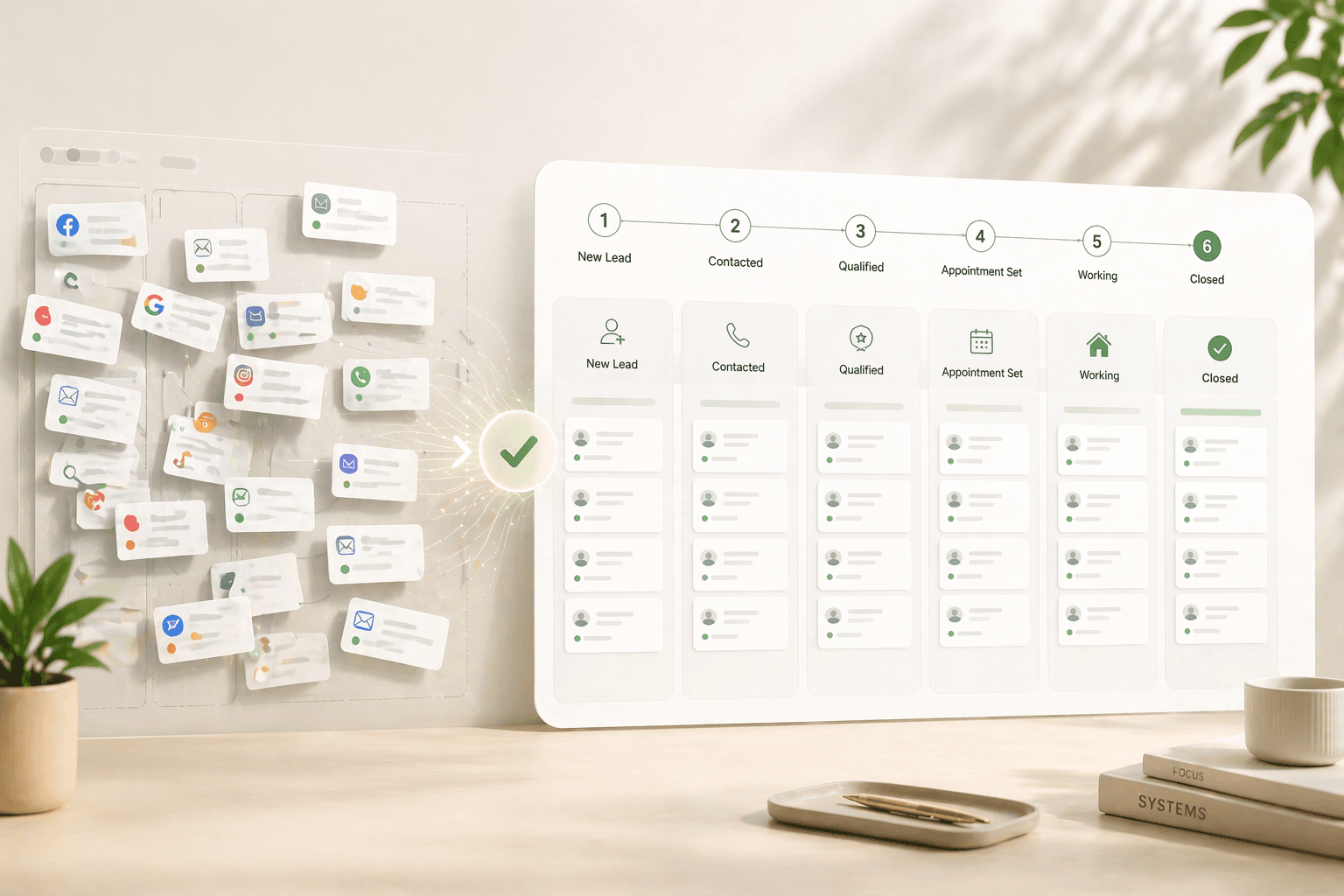
The second problem with static pages is lead leakage. When a buyer clicks "Contact Agent" on a Zillow listing, their contact information goes to Zillow first — and, depending on the Premier Agent model, to multiple competing agents simultaneously. When that same buyer visits a dedicated property page on your domain and fills in a form, the lead goes directly into your CRM — exclusively. The static MLS listing isn't just delivering a mediocre experience. It is actively routing your best leads to a platform you don't own, to be shared with agents you're competing against. A quick property page on your own domain captures the same buyer at the same moment of interest, but the relationship that follows belongs entirely to you.
What AI-powered property pages actually do
An AI-powered quick property page is not a prettier version of a standard listing. It is a different category of tool, with five functional differences that compound into dramatically better buyer engagement. The first is speed of creation: an AI property page builder pulls listing data from the MLS, auto-generates a property description using natural language processing, selects the optimal photo order, and publishes a live page in minutes rather than hours. The manual alternative — writing a description, building a page in a website editor, formatting for mobile — takes 45–90 minutes per listing and results in inconsistent quality across your portfolio.
The second functional difference is description quality at scale. AI description generation tools trained on real estate listing data produce copy that highlights the features buyers search for, incorporates neighbourhood keywords for SEO, and avoids the generic phrases ("move-in ready," "must see") that portal algorithms and buyers alike have learned to ignore. A New York agency reported a 30% increase in lead enquiries after switching to AI-generated listing descriptions, per analysis by MyAIFrontDesk. The reason is not novelty — it is that AI consistently applies best practices (specific square footage, named schools, commute times, recent renovations) that agents skip under time pressure.
The third functional difference is immersive media integration. An AI property page treats the 3D tour, floor plan, video walkthrough, and still photography as a unified buyer journey rather than a stack of separate attachments. This matters because 62% of buyers actively seek listings with immersive 3D tours, per Zillow's 2024 Consumer Housing Trends Report, and 63% of buyers across 32 major markets have submitted an offer on a property they've never visited in person, relying solely on virtual tools, per a Redfin survey. A property page that delivers that experience — fast, mobile-optimised, with a tour embedded directly rather than linked out — captures that buyer. A page that links to a separate Matterport URL loses them.
Visual media: what the data actually says
The evidence base for visual media in property marketing is substantial and specific enough to make direct investment decisions from. Properties marketed with 3D tours receive 87% more views than those without, and listings with video generate 403% more enquiries compared to photo-only listings, per REsimpli's 2025 marketing statistics analysis. Homes with professional photography sell 32% faster. These are not correlational impressions — they reflect the mechanics of how buyers actually make decisions online. A listing that loads fast, shows twelve high-quality photos, embeds a 3D walkthrough, and includes a floor plan keeps a buyer on the page for 4–6 minutes. A listing with six average photos and a text description keeps them for under 60 seconds. Every minute of engagement increases the probability of an enquiry.
Stat: Listings with Matterport 3D virtual tours sold up to 31% faster and for up to 9% more on average than comparable listings without, based on a statistical analysis of 143,575 MLS listings across four US markets. — Matterport MLS Transaction Study
The seller-side implications are equally compelling. 73% of homeowners say they prefer to list with an agent who uses video, and 82% of sellers say they would switch to an agent who offers 3D tours, per industry survey data. This means that when you pitch a listing appointment, the agent across the table who can say "your home will have a 3D tour, a professional video walkthrough, a dedicated property page, and live on its own URL I'll share directly with buyers" is winning that appointment at a measurable rate over the agent who says "I'll post it on the MLS and Zillow." Property page technology is not just a buyer engagement tool — it is a listing acquisition tool.
The Harvard Business School caveat is worth noting: a 2023 study by Professor Isamar Troncoso, analysing 75,000 home sales, found that when controlling for photo quality and listing description quality, 3D tours alone did not significantly boost sale prices. The important nuance is the control variable: when photos and descriptions are excellent, the tour adds less marginal value. When photos are mediocre and descriptions are generic — the default output of most listing workflows — the tour does much of the differentiation work. An AI property page that elevates all three elements simultaneously produces results no single element alone achieves.
Lead capture: from passive page to active funnel
The average real estate landing page converts at a median rate of 2.6%, with top-performing pages reaching 7.4%, per Landingi's 2026 analysis of real estate landing page benchmarks. The gap between a 2.6% converting page and a 7.4% converting page — applied to 200 monthly visitors — is the difference between 5 enquiries per month and 15. At a 5% close rate on enquiries, that is 0.25 additional closings versus 0.75 per month from the same traffic. Over 12 months: 3 additional closings just from a better page. The elements that explain that gap are specific and buildable: a single prominent call-to-action (not buried in a footer), a short lead form (name and email, not 8 fields), a scroll-triggered prompt ("Want to know the price history? Enter your email"), and a visual trust signal (agent photo, number of homes sold, review count).
AI-powered property pages add a behavioural layer that static pages cannot replicate: dynamic lead prompts triggered by visitor actions. When a buyer spends 90 seconds on the floor plan tab, an AI system can fire a modal offering a personalised showing time. When they scroll past the neighbourhood section, it can surface a "Get a detailed area report" form. When they try to close the tab, it can present a "Save this listing" prompt that captures email without requiring an immediate showing commitment. Each of these micro-conversions captures a lead that would have left silently on a static page. Over a high-traffic listing, these behavioural triggers typically add 20–35% more captured contacts compared to a static form alone.
Once the lead is captured, the response window is critical. Velocify's research found that responding within one minute of a lead enquiry produces a 391% improvement in contact rate. For a property page enquiry — where the buyer is actively engaged, looking at specific photos, emotionally invested — the first-minute window is even more powerful than for a cold portal lead. Pinova's property pages fire an immediate SMS to the agent and auto-send a branded acknowledgment to the buyer within 60 seconds of form submission, keeping the buyer in the conversation while the agent responds.
SEO and shareability: the compounding benefits
A quick property page on your own domain does two things a Zillow listing never can: it builds your website's domain authority and it gives you a shareable URL you control. Every link you send — to buyers, past clients, social media posts, email campaigns — points to your website, not Zillow's. Search engines register those visits on your domain, not the portal's. Over 12 months of consistent property page publishing, the SEO benefit compounds: Google begins associating your domain with local property listings, neighbourhood keywords, and real estate search intent in your market. SEO accounts for 53% of website traffic for real estate agents, per REsimpli's 2025 data, making domain authority a long-term asset worth building.
The shareability dimension is underrated by most agents. A property page URL — clean, fast, branded — is designed to be shared directly with prospects: "Here's the link to the home we discussed." A Zillow URL shared in this way opens on Zillow's platform, shows the buyer 12 competing agent ads, and invites them to "request info" through Zillow's own lead capture. A branded property page URL delivers the same buyer to your page, your form, and your CRM. The traffic you generate through direct outreach belongs to you. The NAR 2025 data shows 56% of buyers said the hardest part of the process was finding the right property — agents who can serve them a direct link to the right property, instantly, on a page that loads in under two seconds, win that buyer's next phone call.
Social media amplification also differs fundamentally between portal links and owned property pages. When you share a Zillow URL on Instagram, the link preview shows Zillow's branding. When you share your own property page URL, the preview shows your brand, your agent photo, and the listing headline you control. Social media posts with video content generate 1,200% more shares than text and image content combined, per REsimpli's analysis — and a branded property page with an embedded video walkthrough gives you that advantage every time you post a new listing.
What a high-converting property page looks like in practice
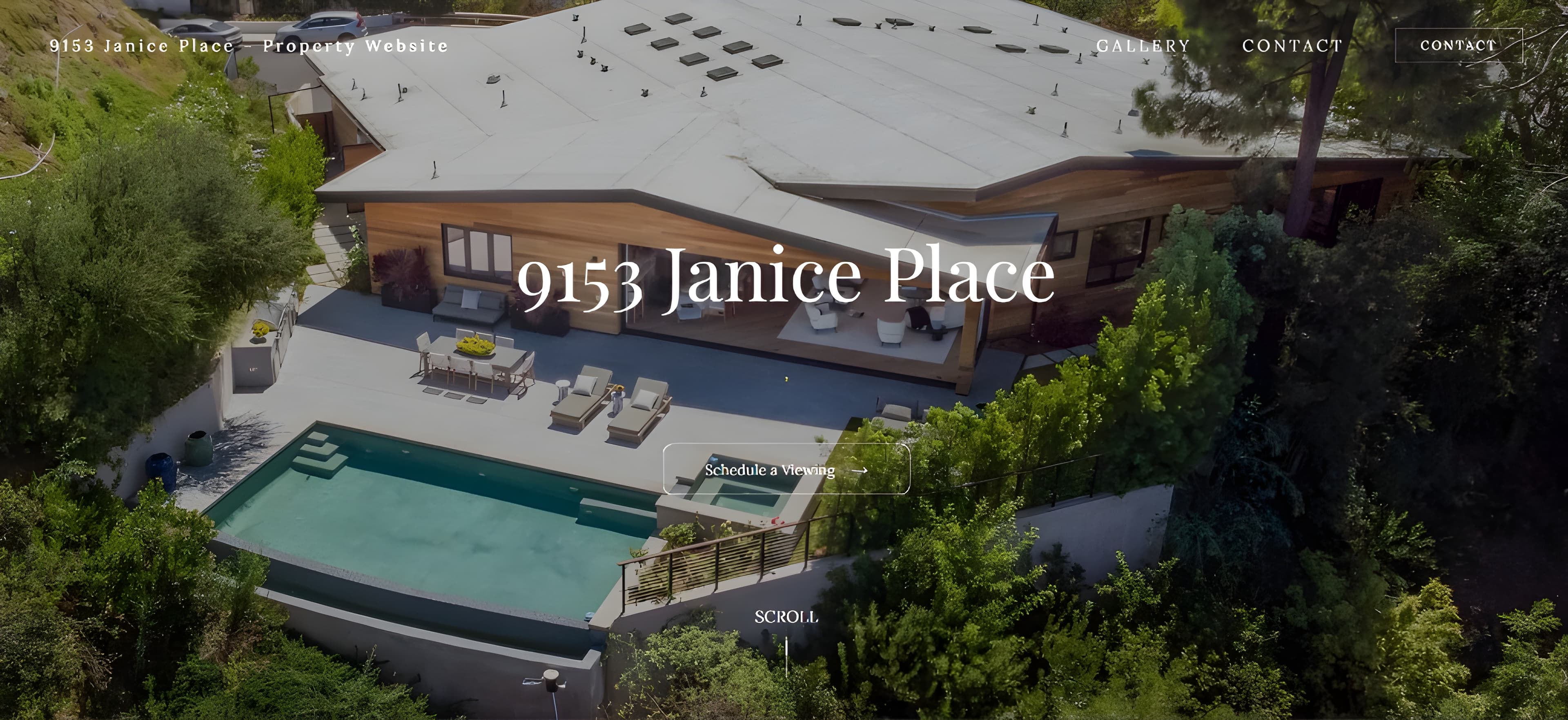
The anatomy of a property page that converts above the 7.4% median is consistent across markets and price points. The above-the-fold section — what the buyer sees before scrolling — must contain: the hero photo or video (loading in under 2 seconds), the price and key stats (beds, baths, square footage), and one prominent call-to-action button ("Schedule a Showing" or "Get Floor Plan"). No navigation menu, no agent biography, no sidebar. First impressions on listing pages are formed in under 50 milliseconds, according to research cited by conversion optimisation practitioners — the only question the hero section needs to answer is: "Is this property worth 60 more seconds of my time?"
Below the fold, the page should follow the buyer's natural decision sequence: photos → 3D tour or video → floor plan → property description → neighbourhood context → agent contact. Each section should answer one question. Photos answer: "Does this look like what I pictured?" The tour answers: "Can I actually imagine living here?" The floor plan answers: "Does the layout work for my life?" The description answers: "What am I missing that photos don't show?" The neighbourhood section answers: "Is this the right location?" The contact section answers: "How do I make this happen?" An AI system that generates each section from listing data — rather than requiring an agent to write and format each element manually — is the practical difference between a property page that gets published consistently and one that gets published on the 30% of listings the agent has time for.
The neighbourhood context section is the most underused differentiator on most property pages. Buyers in the 10-week median search process spend significant time evaluating location alongside the property itself. A page that tells them the walk score, the closest school rating, the commute time to the three nearest major employers, and the median sale price in that ZIP code over the past 90 days gives them information they would otherwise have to compile themselves — and keeps them on your page instead of navigating to Google Maps, GreatSchools, and Redfin to find it. Every external navigation is a potential exit from your funnel.
| Key Statistic / Finding | Source & Year |
|---|---|
| 52% of buyers found their home online in 2025; 70% used a mobile or tablet device during their search | NAR 2025 Profile of Home Buyers and Sellers |
| Properties marketed with 3D tours receive 87% more views than listings without them | REsimpli Real Estate Marketing Statistics, 2025 |
| Listings with video generate 403% more enquiries compared to listings without video | REsimpli Real Estate Marketing Statistics, 2025 |
| Listings with Matterport 3D tours sold up to 31% faster and for up to 9% more than comparable listings without, across 143,575 MLS listings in four US markets | Matterport MLS Transaction Study |
| 53% of mobile visitors abandon a page that takes more than 3 seconds to load; a 1-second delay in mobile load time reduces conversions by up to 20% | Google Mobile Speed Research |
| 62% of buyers actively seek listings with immersive 3D tours when shopping online, per Zillow's 2024 Consumer Housing Trends Report | Zillow 2024 Consumer Housing Trends Report |
| 73% of homeowners prefer to list with an agent who uses video; 82% of sellers say they would switch to an agent offering 3D tours | Industry survey data cited in REsimpli Real Estate Marketing Statistics, 2025 |
| The average real estate landing page converts at a median of 2.6%; top-performing pages reach 7.4% | Landingi Real Estate Landing Page Best Practices, 2026 |
| 63% of buyers across 32 major markets submitted an offer on a property they had not visited in person, relying on virtual tools and online information | Redfin Home Buyer Survey |
| SEO accounts for 53% of website traffic for real estate agents | REsimpli Real Estate Marketing Statistics, 2025 |
| Responding to a lead within 1 minute produces a 391% improvement in contact rate, per Velocify research | Velocify Lead Response Research |
Frequently Asked Questions
What is a quick property page for real estate?
A quick property page is a single-listing website — hosted on an agent's own domain — that showcases one property with fast-loading photos, an embedded 3D tour or video walkthrough, a floor plan, neighbourhood data, and a lead capture form that routes directly to the agent's CRM. Unlike a Zillow or Realtor.com listing, the agent owns every visitor interaction: contact enquiries come to the agent exclusively, not to a platform that distributes them to multiple competing agents. AI-powered property page builders create these pages automatically from MLS listing data, generating the description, organising the media, and publishing a mobile-optimised page in minutes.
Do 3D virtual tours actually help sell homes faster?
Yes, based on large-scale MLS data. A statistical analysis of 143,575 listings across four US markets, published by Matterport, found that listings with 3D virtual tours sold up to 31% faster than comparable listings without them — approximately 10 fewer days on market. A second study using comparative market analysis techniques in the same dataset found similar results. However, a 2023 Harvard Business School study by Professor Isamar Troncoso found that when controlling for photo quality and description quality, the tour's independent effect on sale price was less significant. The practical implication: a 3D tour works best as part of a complete high-quality listing package — not as a substitute for strong photography and writing.
How do AI property pages generate listing descriptions?
AI property description tools use natural language processing trained on large datasets of real estate listings to convert structured data — beds, baths, square footage, recent renovations, neighbourhood, school district, commute times — into readable, search-optimised property copy. The best tools avoid generic phrases like "move-in ready" and substitute verifiable specifics: "2021 kitchen remodel with quartz countertops," "9-minute drive to downtown," "zoned for Lincoln Elementary." Most AI listing generators produce a draft in under 30 seconds that the agent then reviews for accuracy and Fair Housing compliance. One New York agency reported a 30% increase in lead enquiries after switching to AI-generated descriptions, per industry analysis — primarily because the AI consistently applied best-practice specificity that agents skip under time pressure.
What should a high-converting real estate property page include?
The hero section (above the fold) should show the primary photo loading in under 2 seconds, the key stats (price, beds, baths, square footage), and one clear call-to-action button. Below the fold: the full photo gallery, an embedded 3D tour or video walkthrough, an interactive floor plan, the AI-generated property description with neighbourhood context (school ratings, walk score, commute times, recent comparable sales), and the lead capture form. The median conversion rate for real estate landing pages is 2.6%; top-performing pages hit 7.4%, per Landingi's 2026 analysis. The gap is explained by page speed (under 2 seconds), a single prominent CTA rather than multiple competing ones, and a short form (name and email only, not 8 fields).
Why does page speed matter so much for property listing pages?
Because 70% of buyers search on mobile devices (per NAR's 2025 data) and mobile users are significantly less tolerant of slow pages than desktop users. Google's research found that 53% of mobile visitors abandon a page that takes more than 3 seconds to load, and each additional second of load time reduces conversion rates by 4.42% during the first 5 seconds. For a listing page receiving 100 mobile visitors, a 3-second load time versus a 1-second load time represents roughly 40 additional bounces before a buyer even sees the first photo. Fast-loading property pages aren't a technical nicety — they're the prerequisite for every other element on the page doing its job.
Can a property page help win more listing appointments?
Yes — and this is the most underused application of dedicated property pages. When pitching a listing appointment, an agent who can show a seller a sample property page — fast-loading, with a 3D tour, professional video, floor plan, and branded lead capture — is demonstrating a concrete marketing advantage over agents who promise "MLS and Zillow." Industry survey data shows 73% of homeowners prefer to list with an agent who uses video, and 82% would switch to an agent who offers 3D tours. A property page is a tangible artifact you can show in the listing presentation: here is the exact experience buyers will have when they view your home online.
What is the difference between a property page and a Zillow listing?
The fundamental difference is ownership. A Zillow listing routes buyer enquiries through Zillow's platform, where they are distributed to multiple competing agents (under the Premier Agent model), and all buyer data belongs to Zillow. A property page on your own domain routes enquiries directly to your CRM — exclusively. All buyer contact information, search behaviour, and engagement data belongs to you. Additionally, property pages support branded URLs you can share directly (in emails, social posts, texts), building your own domain authority and SEO equity rather than Zillow's. Every listing you publish as an owned property page is a permanent asset on your domain; every Zillow listing disappears from your control the day the home goes under contract.
Amaan Sheikh
— Co-Founder & CEOAmaan Sheikh is the co-founder and CEO of Pinova. He sets the product direction, builds the partnerships, and personally works with every founding partner. His focus is making enterprise-grade real estate technology accessible to ambitious agents and teams — without the enterprise price tag.