Best CRM for real estate agents in 2026 (ranked and reviewed)

Quick Answer
What is the best CRM for real estate agents in 2026?
Key Takeaways
- The average real estate agent takes 917 minutes — over 15 hours — to respond to a new lead, per Inman's 2025 Real Estate Technology Survey. The agents who respond in under 5 minutes are 21 times more likely to qualify that lead, per InsideSales.com research.
- 78% of homebuyers work with the first agent who responds to their inquiry, according to NAR's 2025 Home Buyers and Sellers Generational Trends Report. Speed is not a courtesy — it is your primary competitive differentiator.
- 23% of agents cite their CRM as the top source of quality leads, second only to social media, per NAR's 2025 Technology Survey — making CRM selection one of the highest-leverage decisions a solo agent makes.
- 52% of all inbound leads arrive outside standard business hours, per HubSpot research. Without 24/7 AI coverage, you are handing half your pipeline to whoever responds first.
- Agents using AI-enhanced CRMs reported 67% faster response times to new leads, per NAR's 2024 Technology Survey — translating directly into higher appointment and conversion rates.
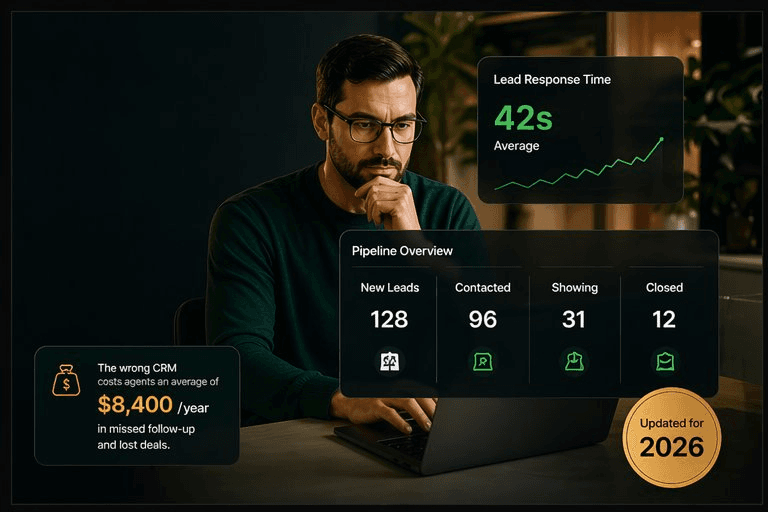
Consider a specific scenario: Marcus, a solo agent in Phoenix, gets a Zillow inquiry at 9:47 PM on a Thursday. He sees it at 7:15 AM Friday — 9 hours and 28 minutes later. By then, the buyer has already booked a showing with a competing agent who had an AI respond within two minutes. Marcus never knew the deal existed. At a median Phoenix commission of roughly $12,000, that one missed response cost him a month's income.
This guide ranks the five leading real estate CRM platforms by the metrics that actually determine revenue: speed-to-lead automation, AI capability, IDX integration, nurture depth, and total all-in cost. By the end, you'll know which platform fits your volume and budget — and exactly what to demand from whichever system you choose.
Who actually needs a real estate CRM
If you are managing more than 20 active leads at any one time without a CRM, you are losing money on a schedule you cannot see. The industry average close rate sits between 2% and 5% for online leads. That number collapses to 1–2% when leads are spread across your email, your phone, a Zillow dashboard, and a spreadsheet — because inconsistent follow-up is the single biggest driver of lead decay.
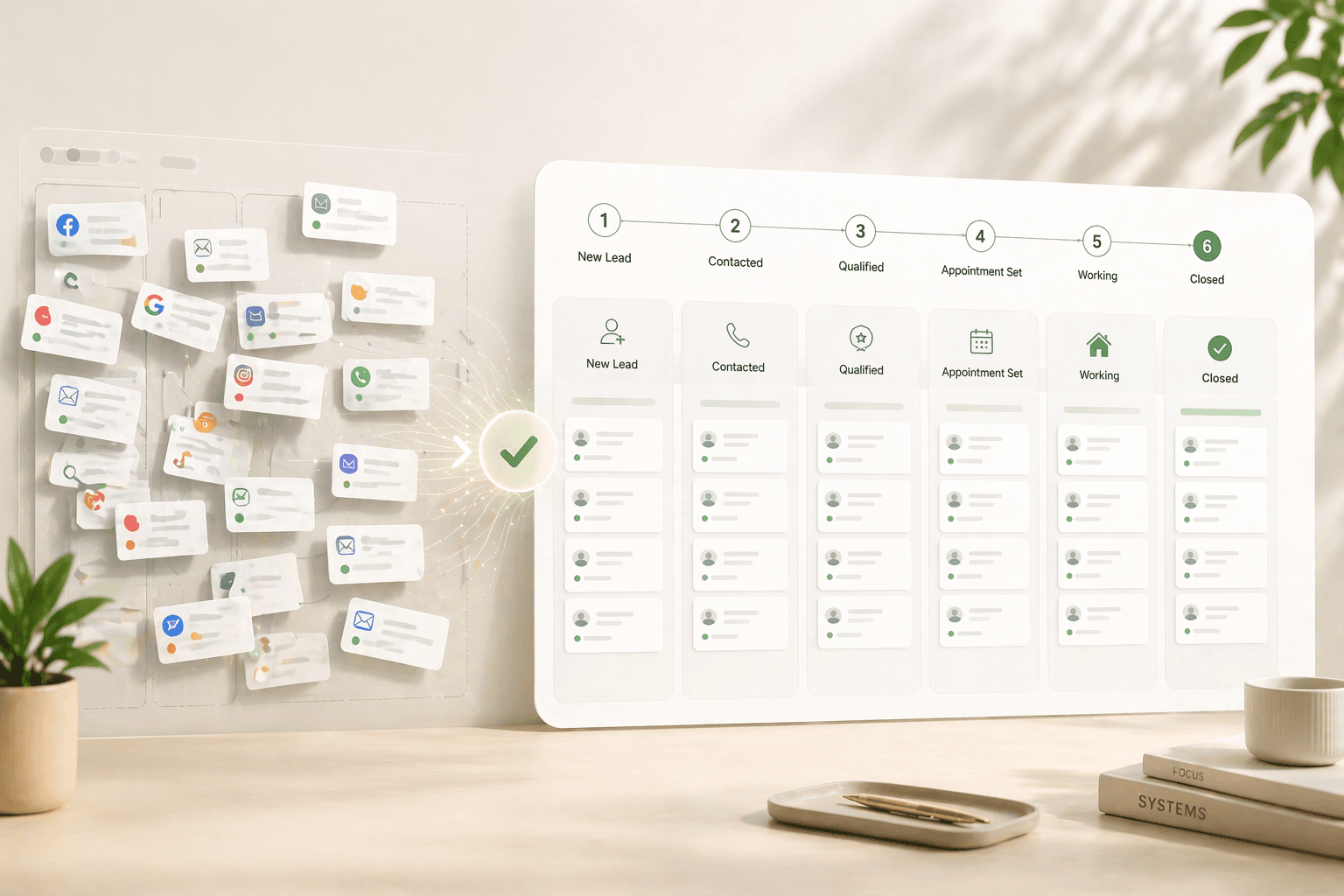
A CRM is not a database. The best real estate CRMs in 2026 are active, automated systems: they respond to leads before you wake up, remind you who is worth calling today, and run 90-day nurture sequences while you are at showings. The agents winning in 2026 are not working harder — they are losing fewer leads to silence and slow response.
NAR's 2025 Technology Survey found that 23% of Realtors now cite their CRM as the top source of quality leads — second only to social media. That figure has climbed every year since 2021. If your current system is a spreadsheet or a collection of Zillow email threads, you are competing in a 2019 market with a 2026 opponent.
Stat: 23% of REALTORS® say their CRM generates the highest volume of quality leads — ranking it second only to social media among all lead sources. — NAR 2025 Technology Survey
What to look for in 2026
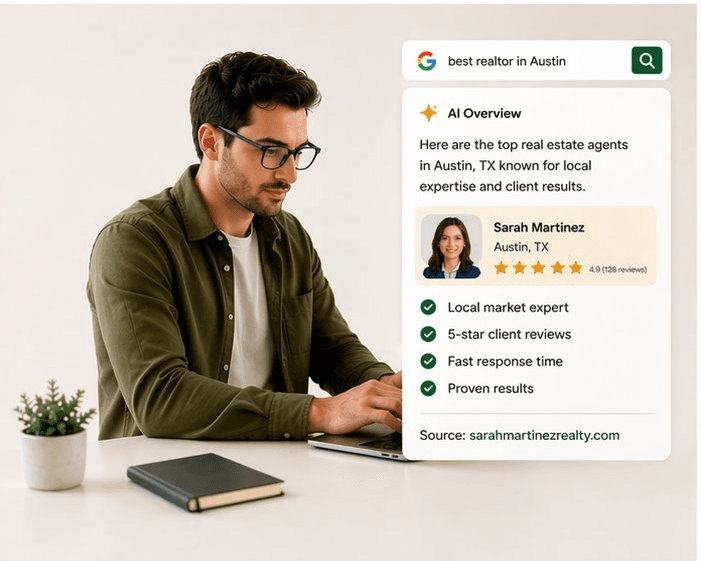
The CRM market has been reshaped by three forces in the past two years: AI automation, 24/7 lead expectations, and platform consolidation. Buyers submitting a Zillow inquiry at 11 PM now expect a response within minutes. Platforms that cannot deliver that are not just inconvenient — they are structurally unable to compete. Here is the criteria framework this ranking uses.
Speed-to-lead automation. Can the CRM respond to a new lead in under 60 seconds, at 2 AM, without you touching your phone? This is the single variable with the largest measured impact on qualification rate. InsideSales.com research shows that agents who respond within 5 minutes are 21 times more likely to qualify a lead compared to those who wait 30 minutes — and that gap only widens overnight.
IDX integration. Your website and your CRM need to speak the same language natively. A lead browsing property on your site should land directly in your CRM pipeline — with the properties they viewed, the price range they filtered, and a behavioral score — without any manual import step.
Lead source integration. Zillow, Realtor.com, Facebook Lead Ads, Google LSA — a 2026 CRM needs to pull every source into one unified pipeline. Toggling between dashboards is how leads go cold.
Nurture automation depth. Pre-built email and SMS sequences that run for 90+ days without manual intervention. The lead who goes quiet at day 3 needs to be re-engaged automatically at day 14. Agents who rely on memory for this lose the deal to whoever has a sequence running.
Mobile usability. You are at showings, not at a desk. NAR data shows 80% of agents work primarily from smartphones. If a CRM's mobile app is a stripped-down version of the desktop product, it will fail in real-world use.
2026 reality check: 52% of inbound leads now arrive outside standard 9-to-5 business hours. After-hours leads that receive a same-night response convert at an 85% contact rate, compared to 35% for next-morning response — a gap of 50 percentage points that can only be closed with automated AI coverage, not with manual effort. — HubSpot Lead Response Research, 2025
The top 5 platforms ranked
The following ranking evaluates platforms across speed-to-lead automation, AI feature depth, IDX integration quality, and published pricing as of May 2026. The table reflects real-world setup complexity alongside cost — because a $69/user platform that requires three additional integrations to function is not actually a $69 platform.
| Key Statistic / Finding | Source & Year |
|---|---|
| Pinova — Best for solo agents + small teams | Speed-to-lead: Under 60s (AI) | AI capability: Full AI response + nurture | Pricing: see pinova.in/plans | CRM comparison, May 2026 |
| Follow Up Boss — Best for teams with existing stack | Speed-to-lead: Manual trigger required | AI capability: Limited (basic routing) | From $69/user/mo | CRM comparison, May 2026 |
| kvCORE — Best for large brokerages | Speed-to-lead: Moderate (setup-dependent) | AI capability: Basic automation | $499+/mo | CRM comparison, May 2026 |
| BoomTown — Best for high-volume teams | Speed-to-lead: Moderate | AI capability: Basic | $1,000+/mo | CRM comparison, May 2026 |
| LionDesk — Best for budget solo agents | Speed-to-lead: Manual only | AI capability: None | From $39/mo | CRM comparison, May 2026 |
The field has narrowed sharply. Legacy platforms like LionDesk have not kept pace with the automation requirements of a 24/7 buyer market. Follow Up Boss remains strong for teams already embedded in a broader tech stack, but its per-user pricing escalates quickly and AI response requires third-party add-ons. See our full Pinova vs Follow Up Boss breakdown for a granular comparison of the top two contenders.
Why Pinova ranks #1 for solo agents
Most CRMs were built to organize data. Pinova was built to answer the question that actually costs solo agents money: "What happens to a lead at 11 PM when I'm asleep?" The answer, on every other platform, is: nothing. The answer on Pinova is: a personalized AI response goes out within 60 seconds, regardless of lead source.
Sub-60-second AI response. Every new lead from any connected source — Zillow, your website, Facebook Lead Ads, Google LSA — receives a personalized AI response in under 60 seconds, around the clock. The message is generated from the lead's inquiry context, not a canned template. By the time you check your phone Monday morning, warm leads from the weekend are already in a qualified pipeline.
Website and CRM in one. Pinova includes a custom-branded IDX website at no additional cost. Most agents pay $99–$300 per month for a separate IDX platform. Because the website and CRM share the same infrastructure, lead behavior data — pages viewed, saved searches, price filters — flows directly into the CRM record without a Zapier connection or manual import.
90-day automated nurture. Pre-built email and SMS sequences run for 90 days from lead capture, timed to behavioral triggers. A lead who saves a property but doesn't respond to the initial outreach gets a different sequence than one who books a call. The lead who goes quiet at day 3 gets re-engaged automatically at day 14, then again at day 30. Without this, most agents lose touch after the second manual follow-up — and hand the deal to whoever stayed in contact.
Pricing comparison
Platform pricing rarely reflects actual cost. A CRM at $69/month that requires separate subscriptions for an IDX website, an email automation tool, and an AI response layer is not a $69/month CRM. The table below shows the real stack cost a solo agent typically builds to match what Pinova includes out of the box.
| Key Statistic / Finding | Source & Year |
|---|---|
| CRM — Traditional stack: $69-$199/mo | Pinova: Included |
| IDX website — Traditional stack: $99-$300/mo | Pinova: Included |
| Email automation — Traditional stack: $49-$99/mo | Pinova: Included |
| AI lead response — Traditional stack: $99-$199/mo | Pinova: Included |
| Total — Traditional stack: $316-$797/mo | Pinova: one subscription, see pinova.in/plans |
NAR's 2025 Technology Survey found that 24% of agents already spend more than $500 per month on technology tools out of pocket — often because they have assembled exactly this kind of fragmented stack. Consolidating onto a single platform eliminates the integration overhead and the monthly reconciliation of four different vendor invoices.
Final verdict
For solo agents and small teams, the calculus is clear: the platform that responds first wins the deal. NAR's 2025 data confirms that 78% of buyers work with the first agent who responds. Any CRM that cannot deliver an automated, personalized response in under five minutes — around the clock — is leaving the majority of your pipeline to chance.
If you are a large brokerage already deeply integrated with kvCORE and you have a full-time admin managing the system, the switching cost may not be worth it. But for the solo agent currently paying for three separate tools that still do not talk to each other cleanly — or the agent using nothing but a spreadsheet and their inbox — the consolidation alone pays for the subscription. The goal is not to have a CRM. The goal is to lose fewer deals to silence.
Key Statistics: Real Estate CRM and Lead Response
| Key Statistic / Finding | Source & Year |
|---|---|
| The average real estate agent takes 917 minutes (over 15 hours) to respond to a new lead inquiry | Inman Real Estate Technology Survey, 2025 |
| Agents who respond to web leads within 5 minutes are 21x more likely to qualify that lead vs. waiting 30 minutes | InsideSales.com / Real Trends Lead Response Study, 2025 |
| 78% of homebuyers end up working with the first real estate agent who responds to their inquiry | NAR 2025 Home Buyers and Sellers Generational Trends Report |
| 23% of REALTORS® cite CRM as their top source of quality leads, second only to social media (39%) | NAR 2025 Technology Survey |
| 52% of inbound leads arrive outside standard business hours | HubSpot Lead Response Research, 2025 |
| After-hours leads receiving same-night response achieve an 85% contact rate vs. 35% for next-morning response | HubSpot Lead Response Research, 2025 |
| Agents using AI-enhanced CRMs reported 67% faster response times to new leads | NAR 2024 Technology Survey |
| 89% of top-performing real estate professionals will use AI-enhanced CRM systems by 2026 | BoldTrail, 2025 |
| 24% of agents spend more than $500/month on technology tools out of pocket | NAR 2025 Technology Survey |
| Agencies implementing AI-powered CRMs typically see 15-25% increases in lead conversion rates within the first quarter | NextCTL analysis, 2025 |
| Leads receiving 6+ contact attempts convert at rates 70% higher than those receiving fewer touches | Real Trends Research on Buyer Lead Conversion, 2025 |
| 82% of clients respond positively when agents integrate more technology into the buying and selling process | NAR 2025 Technology Survey |
Frequently Asked Questions
How long should it take to respond to a real estate lead?
Research from InsideSales.com and Real Trends shows that agents who respond within 5 minutes are 21 times more likely to qualify a lead than those who wait 30 minutes. The average agent currently takes over 15 hours, per Inman's 2025 survey — meaning a sub-5-minute automated response puts you ahead of nearly all your competition without any additional marketing spend.
Do I need an IDX website and a CRM, or can one platform handle both?
In 2026, the cleanest setup is a single platform that handles both natively. When your IDX website and CRM share the same database, lead behavior data — saved properties, price range filters, pages viewed — flows automatically into the lead record without any integration layer. Platforms that bolt these together via third-party connections create data lag and require ongoing maintenance to keep the sync working correctly.
What CRM do most real estate agents use in 2026?
According to NAR's 2025 Technology Survey, the most widely used CRM categories among agents are real estate-specific platforms — not generic tools like HubSpot or Salesforce. Follow Up Boss dominates mid-market teams, kvCORE serves large brokerages, and all-in-one platforms that include an IDX website and AI response are gaining share among solo agents who want to reduce their monthly tool count. The key shift from 2024 to 2026 is that agents are selecting CRMs primarily on AI automation capability, not feature breadth.
How much should a solo real estate agent spend on a CRM?
NAR's 2025 Technology Survey found that 34% of agents spend $50–$250 per month on technology, and 24% spend over $500. The practical benchmark for a solo agent is $100–$400 per month all-in — but that number needs to include every tool the CRM requires to function at full capacity: IDX website, email automation, and AI response. A $69/month CRM that requires $300 in add-ons is a $369/month CRM.
What is speed-to-lead and why does it matter for real estate?
Speed-to-lead is the time between a prospect submitting an inquiry and an agent making first contact. In real estate, where NAR data shows 78% of buyers choose the first agent who responds, speed-to-lead is the single largest conversion variable. Every minute of delay degrades the probability that the lead is still available, still on the phone, or still receptive. The only reliable way to achieve sub-5-minute response at scale — especially outside business hours — is automated AI response connected directly to your lead sources.
Is a CRM worth it for part-time real estate agents?
If you are closing fewer than 5 transactions per year, a full-featured CRM may be more infrastructure than you need. But if you are generating any paid leads — from Zillow, Realtor.com, or Facebook — the cost of slow response almost certainly exceeds the cost of a CRM subscription. A single missed deal at the median U.S. commission is worth 12–24 months of most CRM subscriptions. The breakeven is low.
What AI features should a real estate CRM have in 2026?
The non-negotiable AI features in 2026 are: automated first response (sub-60 seconds, 24/7, personalized to the inquiry), behavioral lead scoring (prioritizing leads by engagement signals like property saves or repeated visits), and AI-written nurture sequences that adapt to lead behavior over time. Secondary but valuable: AI-generated property descriptions, predictive analytics on lead intent, and natural-language conversation handling that can qualify a lead and schedule a showing without agent involvement.
Can I switch CRMs without losing my existing lead data?
Yes, but the process varies significantly by platform. Most major CRMs export lead data as a CSV, and most competing platforms accept that import format. The harder migration is recreating active nurture sequences, email templates, and pipeline stages — these typically require manual reconstruction. Before switching, audit which leads are in active sequences and how many open deals depend on CRM reminders, then build a parallel system before deactivating the old one.
📚 Related Reading
Amaan Sheikh
— Co-Founder & CEOAmaan Sheikh is the co-founder and CEO of Pinova. He sets the product direction, builds the partnerships, and personally works with every founding partner. His focus is making enterprise-grade real estate technology accessible to ambitious agents and teams — without the enterprise price tag.