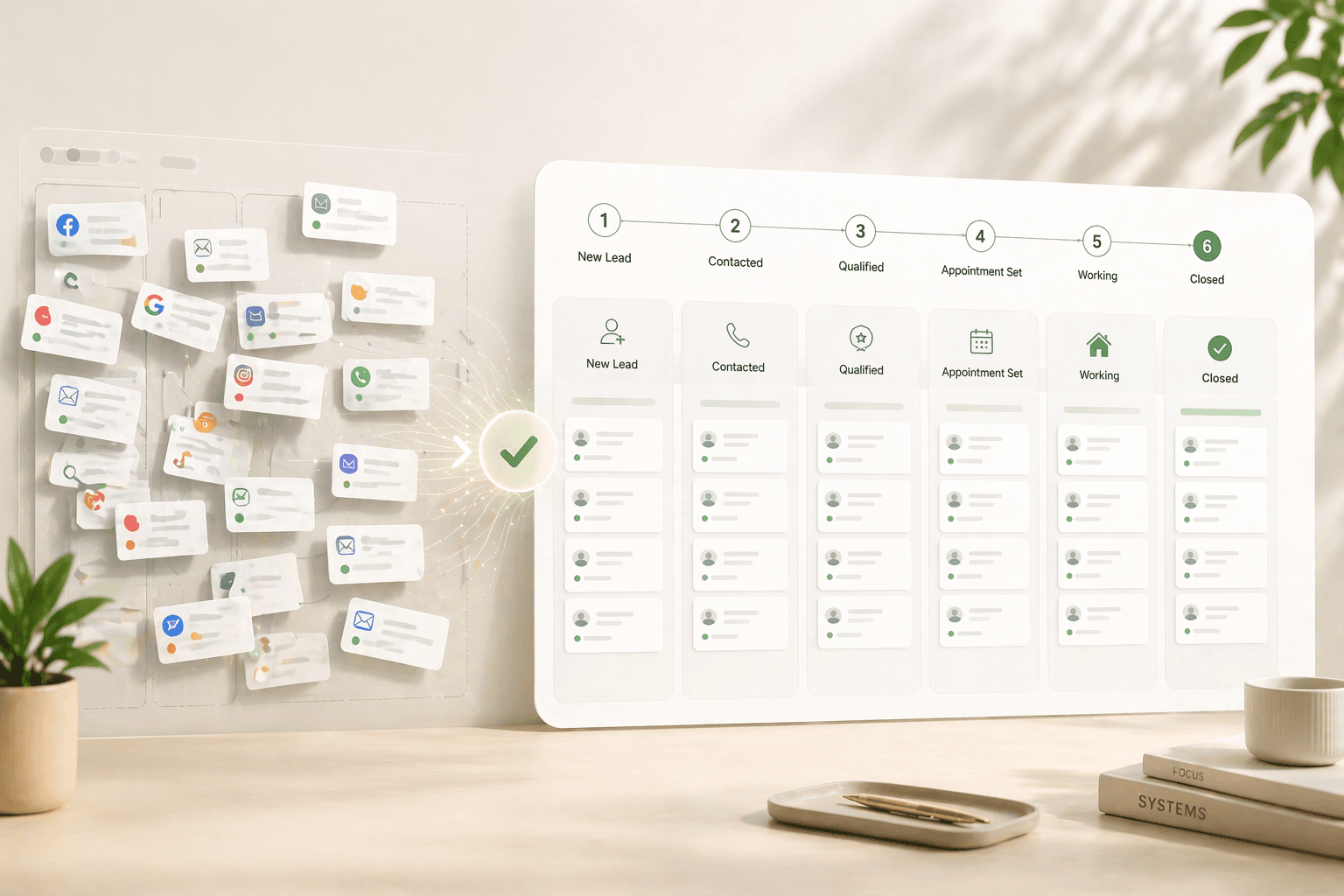
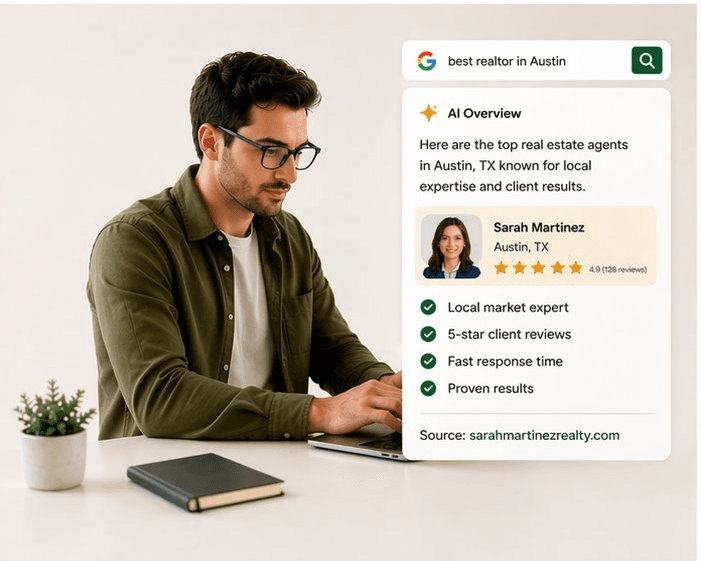
IDX Website vs Zillow Profile: What Actually Gets Listing Appointments

Quick Answer
Is an IDX website or a Zillow Premier Agent profile better for generating listing appointments?
An IDX website builds a lead pipeline you own permanently; Zillow Premier Agent rents you access to a pipeline that evaporates the moment you cancel. Zillow leads cost $139–$223 each on average, are shared with multiple competing agents, and convert at roughly 0.5–1% nationally. IDX websites generate organic leads at $15–50 each after the initial SEO investment, capture visitor data under your brand, and compound in value over time. For agents with 12+ months of time horizon, an IDX website produces better long-term ROI. For agents who need closed deals in 60 days and have the budget, Zillow can be an effective short-term accelerator — but not a substitute for building owned infrastructure.
Key Takeaways
- 52% of buyers found their home online and 70% used a mobile device during their search, per NAR's 2025 Profile of Home Buyers and Sellers — making your online presence a prerequisite, not an upgrade.
- Zillow Premier Agent leads average $139–$223 each in 2025, with costs in hot ZIP codes reaching $450+, per Thunderbit's 2025 industry analysis — and that spend disappears the moment you stop paying.
- Agent discussions on BiggerPockets consistently show Zillow leads convert at approximately 0.5–1% nationwide, meaning a $1,500 monthly budget may yield fewer than two closings per year before follow-up costs.
- 36% of sellers now find their agent through online channels — more than double the 15% share in 2018 — per Zillow's own 2025 Consumer Housing Trends Report for Agents, meaning your website is increasingly where selection decisions are made.
- Organic real estate website leads cost $15–50 each after the initial SEO build, according to MLSImport.com's 2025 channel analysis, and keep generating traffic after you stop "paying" for them — the inverse of any portal spend model.
Marcus Webb, a solo agent in Phoenix, Arizona, was spending $3,500 a month on Zillow Premier Agent leads. After 11 months, he had closed 4 deals from that spend — a gross commission of roughly $48,000 against a cost of $38,500, before splits. He wasn't losing money, but he was barely making any, and every lead he received was simultaneously going to two or three other agents in his ZIP code. In month 12, one of those competitors — an agent with an IDX website that ranked for "Scottsdale homes under $600k" — closed the same buyer Marcus had been nurturing for six weeks. The buyer had gone back to Google, found the competing site, registered, and called.
This article breaks down exactly what you get from each channel: the real cost-per-lead math for Zillow Premier Agent versus an IDX website, how lead quality and ownership differ structurally, what the 3-year numbers look like side by side, and how to use both without letting Zillow become a permanent dependency. By the end, you'll know which to prioritise first based on your timeline, budget, and risk tolerance.
The Zillow trap most agents fall into
The Zillow trap isn't that the platform is bad — it's that agents treat a rental as if it were an asset. Zillow Premier Agent operates on a ZIP code auction model: you buy a percentage share of visibility in specific ZIP codes, and the platform routes leads to you based on that share. What Zillow doesn't advertise loudly is the structural competition baked into that model. According to industry analysis from LeSix Agency citing RealIntent data, Zillow leads are typically shared among three to five agents simultaneously. You are not buying exclusive access to a buyer. You are buying a lottery ticket in a race where the fastest phone answer wins.
The conversion numbers make this concrete. Agent communities on BiggerPockets consistently report Zillow leads converting at approximately 0.5–1% nationwide. At a $1,500 monthly budget and an average lead cost of $75, you generate roughly 20 leads per month — 240 per year. At a 1% conversion rate, that's 2.4 closings annually from an $18,000 yearly investment. Agents with exceptional speed-to-lead systems and robust CRM nurture sequences claim 2–3%, but those require response times under five minutes every time a lead fires.
Stat: 47% of buyers and 59% of sellers hire the first agent they speak with, according to Zillow's own 2025 Consumer Housing Trends Report for Agents — meaning whoever answers the lead phone fastest wins the client, regardless of who paid to acquire the lead first. — Zillow Consumer Housing Trends Report, 2025
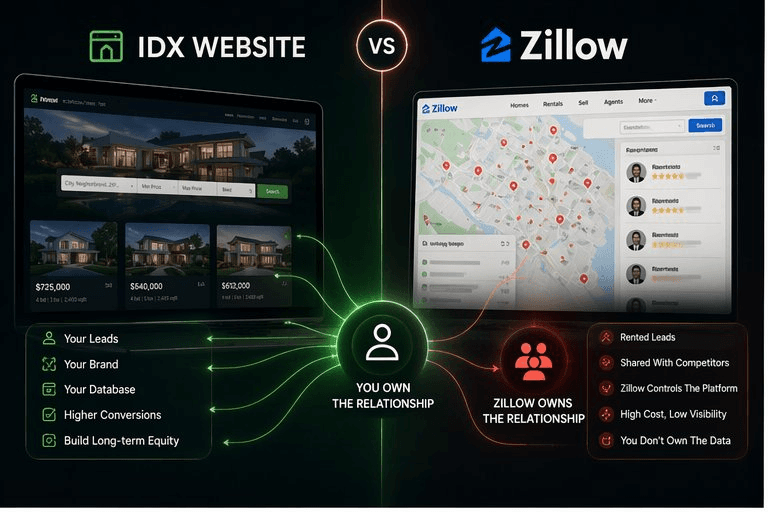
The deeper trap is the dependency cycle. Agents who build their entire pipeline on Zillow have no business the month they stop paying. There are no repeat visitors to your brand, no email list you own, no Google ranking that persists. The pipeline is entirely Zillow's asset, not yours. When Zillow raises prices — which it has done repeatedly as ZIP codes fill up — you have no leverage and no alternative. An agent who has spent 36 months building Zillow spend and zero months building an owned website is in a structurally worse position than when they started, even if the P&L shows profit.
The IDX advantage
An IDX website is, mechanically, a site that pulls live MLS listings directly onto your domain and lets visitors search, filter, save, and register — all under your brand. The critical difference from Zillow is ownership: every visitor who registers on your IDX site is in your CRM, not Zillow's. You can email them, re-target them, call them, and track their search behaviour for weeks without paying anyone a per-lead fee. According to NAR's 2025 Profile of Home Buyers and Sellers, 52% of buyers found their home online and 85% ranked their agent as the most useful information source — meaning the goal is to be present at the moment of online search and then be the agent who earns that trust.
The SEO compounding effect is the key structural advantage. A neighbourhood landing page you publish today — "Homes for sale in Tempe under $550k" — can rank on Google within 3–6 months and keep generating organic traffic for years. According to a 2025 channel cost analysis by MLSImport.com, organic real estate website leads cost $15–50 each after the initial SEO investment, compared to $139–$223 per Zillow lead. The real estate SEO niche is competitive, but hyperlocal keyword targeting — specific subdivisions, school districts, or price bands — gives individual agents a realistic path to ranking above portals. A 2026 SEO analysis by Jeff Lenney found that niche content targeting specific neighborhoods generates the highest ROI of any real estate lead source, often exceeding 5% conversion.
Stat: 36% of sellers now find their agent through online channels — more than double the 15% share in 2018, per Zillow's 2025 Consumer Housing Trends Report for Agents. Your website is no longer a credibility signal; it's a selection filter. — Zillow Consumer Housing Trends Report, 2025
The tactical setup for an IDX site that actually generates appointments requires three things beyond just syncing MLS data. First, a lead capture gate: visitors should be required to register to save searches or request showings, with the minimum friction being a name and email. Second, automated property alert emails that fire when a new listing matches a registered visitor's saved search — this keeps your name in their inbox on days you aren't thinking about them. Third, neighbourhood content: 500–800 word pages for every major area you serve, targeting specific search queries like "[Neighbourhood] homes for sale [City]." Without content, the IDX site is invisible to Google. With it, it becomes an appointment machine on a 6–12 month build timeline.
Cost comparison over 3 years
The 3-year math between Zillow Premier Agent and an IDX website with SEO looks very different depending on which year you're in. In year one, Zillow wins on speed: your IDX site has no traffic yet, and Zillow delivers leads from day one. But the cost structure is radically asymmetric. A typical Zillow Premier Agent budget of $1,500/month costs $18,000 in year one alone. An IDX website platform (Real Geeks, Sierra Interactive, or a custom build) costs $300–$500/month, plus a one-time or monthly SEO investment. Year-one total for the owned site: roughly $5,000–$8,000. The gap is $10,000–$13,000 in year one that Zillow takes and you never recover.
By month 18–24, the IDX website is typically generating consistent organic leads. According to industry analysis at LeSix Agency, organic lead generation compounding typically outperforms bought leads after 18–24 months of consistent SEO effort. Over a full 36 months, a $1,500/month Zillow commitment costs $54,000. A well-built IDX site with SEO content costs $15,000–$22,000 over the same period and continues generating leads in month 37, 38, and beyond at no additional spend. The Zillow spend generates exactly zero leads in month 37 if you've cancelled.
The asymmetry is even starker when you factor in lead quality differences. MLSImport.com's 2025 channel analysis found that portal leads like Zillow close in 3–6 months but at an industry-average conversion rate well below organic leads. Referrals convert at 2.7%, organic search at 2.2%, and paid search (which Zillow approximates) at 2.0%, per Ruler Analytics. But the cost-per-closed-client from organic is a fraction of the portal cost because the lead acquisition cost trends toward zero as your site accumulates domain authority. The practical implication: by month 30, an agent with a well-ranked IDX site is closing deals from content published 18 months ago — at a marginal cost of nearly zero.
Lead quality: own vs. rented
"Lead quality" is a misleading shorthand. What agents actually care about is lead intent and lead exclusivity. On both dimensions, IDX website leads structurally outperform Zillow leads. A visitor who Googled "3 bed 2 bath homes in [your city] under $500k," landed on your IDX site, browsed 12 listings, and registered to save a search has shown far more purchase intent than someone who clicked "Contact Agent" on a Zillow listing at 11pm out of curiosity. The IDX visitor's behaviour data — search history, price range, neighbourhood filter, time on site — is yours to use for personalised follow-up. The Zillow lead arrives with a name and phone number and nothing else.
Exclusivity compounds the advantage. Every IDX lead who registers on your site is exclusively yours. No other agent at your brokerage or across town received the same contact simultaneously. According to Zillow's own platform documentation, their broadcast calling system routes new leads to up to ten agents simultaneously, with the first to answer claiming the contact. This means that even when Zillow generates a high-intent buyer, the "quality" is diluted by the competition for that contact's attention. An IDX lead, by contrast, only knows your name. They entered your ecosystem voluntarily and registered with their real information to get value from your site.
Stat: 7 out of 10 buyers end up working with the first agent they meet in person, per Zillow's Premier Agent training resources — making the first appointment the defining conversion event, not the lead capture itself. — Zillow Premier Agent Training Resources
The practical implication: the right script for an IDX lead is not a cold sales call, it's a warm check-in. When a lead registers on your site, their first email from you should be: "Hi [Name] — I saw you saved a search for 3-bedroom homes in [area]. I have two listings coming to market next week that match. Want me to send details before they're public?" That's a different conversation than a Zillow cold call at the moment of lead capture. IDX leads tolerate a slower, value-first sequence because they came to your site seeking information, not help. Agents who treat IDX leads identically to Zillow leads — with immediate aggressive outreach — kill conversion rates that would otherwise be significantly higher.
Can you use both? Yes — here's how
The honest answer is that Zillow and an IDX website serve different time horizons and should be used together deliberately rather than treated as an either/or decision. Zillow is a tap: turn it on and leads flow immediately, turn it off and they stop. An IDX website with SEO is a well: it takes months to dig but delivers water for years. Agents with an immediate income gap to close should use Zillow as a bridge while building owned infrastructure. Agents with 12+ months of financial runway should prioritise the IDX build from the start and use Zillow selectively in high-value ZIP codes only.
The most dangerous pattern is the one Marcus Webb fell into: staying on Zillow indefinitely because it's generating some ROI, while never allocating resources to build an asset. The benchmark threshold most experienced agents recommend is this — once your IDX site is generating 15 or more inbound leads per month organically, begin reducing Zillow spend in your lowest-converting ZIP codes. Redirect that budget to content production for your IDX site. Within 12 months of doing this, most agents find their cost-per-lead dropping substantially while their appointment rate holds steady.
When running both channels simultaneously, the operational challenge is routing and follow-up speed. Zillow leads demand a sub-5-minute response; IDX leads tolerate a 24–48 hour nurture sequence. Mixing the two into the same CRM queue without tagging them by source is how agents lose both. Pinova's IDX platform automatically tags leads by source at the moment of capture, routes Zillow leads into an immediate call queue, and places IDX registrants into a behaviour-triggered email sequence based on their on-site search activity — keeping the two follow-up strategies distinct without manual sorting.
Which one to prioritise first
The answer depends on three variables: your runway, your market competition, and your follow-up capacity. If you have fewer than 6 months of operating capital, start with Zillow — but cap the spend. A $500–$800/month Zillow commitment in one or two ZIP codes will generate enough leads to sustain income while you build the IDX site in parallel. If you have 12+ months of runway and you're in a market where local content isn't yet competitive, prioritise the IDX site immediately. According to a 2026 real estate SEO guide by Jeff Lenney, hyperlocal neighbourhood content targeting specific subdivisions can show results in 3–4 months — faster than most agents expect.
Your market's competitiveness matters because IDX SEO is harder in dense urban markets where 50 other agents are publishing the same neighbourhood guides. In those markets, Zillow's traffic advantage is more durable and the IDX build takes longer to pay off. In suburban or secondary markets — areas with 2–3 active agent websites and low content competition — an IDX site can rank on page one within 4–6 months. Run a Google search for "homes for sale in [your target neighbourhood]" right now. If the top results are all Zillow, Redfin, and Realtor.com with no local agent sites, you have a significant SEO opportunity that can be captured at a fraction of portal costs.
Follow-up capacity is the final filter. Zillow leads require immediate, persistent outreach — a structured follow-up sequence of 6–8 touches in the first 48 hours is standard for agents who convert above 2%. If you are a solo agent without a dialer or CRM automation, Zillow leads will rot before you can work them. In that scenario, an IDX website's slower-burn lead profile is actually better suited to your capacity. Organic leads who registered for property alerts are warm when you call them 3–5 days later; a Zillow lead who didn't get a response in 20 minutes has already called two other agents.
| Key Statistic / Finding | Source & Year |
|---|---|
| 52% of buyers found their home online; 70% used mobile or tablet devices during their search | NAR 2025 Profile of Home Buyers and Sellers |
| 88% of buyers purchased their home through an agent or broker | NAR 2025 Profile of Home Buyers and Sellers |
| 47% of buyers and 59% of sellers hire the first agent they speak with | Zillow Consumer Housing Trends Report, 2025 |
| 36% of sellers now find their agent through online channels, up from 15% in 2018 | Zillow Consumer Housing Trends Report, 2025 |
| Zillow Premier Agent leads average $139–$223 per lead; costs in hot ZIP codes reach $450+ | Thunderbit Real Estate Lead Costs Analysis, 2025 |
| Zillow leads convert at approximately 0.5–1% nationwide based on agent community data | LeSix Agency Paid Lead Generation ROI Analysis, 2026 |
| Organic real estate website leads cost $15–50 each after the initial SEO investment | MLSImport.com Real Estate Marketing Channels Analysis, 2025 |
| Portal leads (Zillow/Realtor.com) convert at 5–7% for average performers; referrals at 2.7%; organic search at 2.2% | Ruler Analytics / MLSImport.com Channel Analysis, 2025 |
| Organic lead generation compounding typically outperforms buying leads after 18–24 months of consistent effort | LeSix Agency Paid Lead Generation ROI Analysis, 2026 |
| 7 out of 10 buyers end up working with the first agent they meet in person | Zillow Premier Agent Training Resources |
Frequently Asked Questions
How much does Zillow Premier Agent actually cost per lead in 2025?
Zillow Premier Agent leads averaged $139–$223 each in 2025, based on industry pricing data, with costs in competitive ZIP codes like major metro areas reaching $450 or more per lead. Agents typically set monthly budgets rather than paying per lead directly — Zillow sells "share of voice" in specific ZIP codes, and the cost fluctuates based on how many other agents are competing in that area. Monthly budgets in major metros typically start around $1,000 and can climb to $2,500–$4,000 or more. The key variable agents often underestimate is that these leads are shared with multiple competing agents simultaneously.
What is the conversion rate for Zillow Premier Agent leads?
Agent community data from BiggerPockets consistently shows Zillow leads converting at approximately 0.5–1% nationwide. Zillow itself states its leads convert at 3–5%, but that figure reflects the best-performing agents with sub-5-minute response times and sophisticated CRM nurture systems. For the average solo agent without a dedicated ISA or dialer, expect 1% or below. At that conversion rate, a $1,500/month Zillow investment generating 20 leads per month produces roughly 2–3 closings per year from that channel before brokerage splits and taxes.
How long does it take for an IDX website to start generating leads?
An IDX website with consistent SEO effort typically begins generating organic leads within 6–12 months, though agents targeting hyperlocal neighbourhood keywords — specific subdivisions or school districts rather than broad city terms — can see results in 3–4 months according to a 2026 real estate SEO analysis by Jeff Lenney. The first 3 months are primarily technical setup and content publishing with little traffic. Months 4–8 typically show incremental ranking improvements. By month 12, a site publishing 2–3 neighbourhood-specific pages per month will usually have 10–20 organic registrations monthly in a moderately competitive market.
Should I cancel Zillow and switch to an IDX website?
Not immediately. The smarter transition is parallel building: maintain a reduced Zillow spend (capped at $500–$800/month in your single highest-converting ZIP code) while building your IDX site and SEO infrastructure. Once your IDX site generates 15+ inbound leads per month organically — typically at the 12–18 month mark — begin reducing Zillow spend incrementally and redirect that budget to IDX content production. An abrupt Zillow cancellation leaves a lead gap that a brand-new IDX site cannot immediately fill. The goal is to replace a rented pipeline with an owned one on a timeline that doesn't damage your income in the transition.
What makes an IDX website better for lead quality than Zillow?
IDX website leads are exclusive and behaviour-rich; Zillow leads are shared and intent-anonymous. When a buyer registers on your IDX site, only you receive that contact — and you also receive their full search history: price range, bedroom count, neighbourhoods searched, listings saved, and time on site. That data lets you personalise the first contact with specific listings they've already viewed. A Zillow lead arrives as a name and phone number with no search history visible to you. Both lead types can convert, but IDX leads tolerate a longer, value-first nurture sequence because the buyer chose your site voluntarily rather than being routed to you by an algorithm.
Can a solo agent realistically compete with Zillow using an IDX site?
Yes — but only in the right keyword segments. Generic city-level terms like "homes for sale in Austin" are dominated by Zillow, Redfin, and Realtor.com and are essentially impossible for a solo agent to rank for. Hyperlocal keywords — "homes for sale in Barton Hills Austin," "Mueller Austin townhomes," or "Austin homes with pools under $650k" — have far less competition and are realistic targets for a well-built agent site. A 2026 real estate SEO guide found that neighbourhood-specific content often generates organic lead conversion rates exceeding 5%, compared to the 0.5–1% typical of portal-rented leads. The playbook is narrow targeting, deep neighbourhood content, and consistent publishing — not trying to outrank Zillow on their own terms.
How do you follow up with IDX website leads vs Zillow leads differently?
Zillow leads require immediate, high-frequency outreach: call within 5 minutes, follow up by text within the hour if no answer, and run a structured 6–8 touch sequence in the first 48 hours. Any delay collapses conversion rates because the same lead is being called by 2–4 other agents simultaneously. IDX website leads benefit from a slower, value-first sequence: send a personalized email referencing their saved search within 24 hours, follow with a listing alert matching their criteria on day 2, and make a call on day 3–5. The buyer is not being competed for, so the tone can be consultative rather than transactional. Mixing these two follow-up approaches — or using the same aggressive Zillow sequence on IDX leads — is one of the most common conversion mistakes agents make.
Ayushman Singh
— Co-Founder & Chief Brand & Marketing OfficerAyushman Singh is the co-founder and Chief Brand & Marketing Officer of Pinova. He shapes the narrative, builds the brand, and tells the stories the industry doesn't want to hear. He believes the real estate system was designed to extract from agents, not empower them — and he's building the counter-narrative.