The $27,000 Question: What One Extra Closing Per Year Is Really Worth


Quick Answer
How much is one additional closing worth to a real estate agent per year?
Based on NAR's 2025 Member Profile data, the median Realtor closed 10 transactions in 2024 and earned $58,100 gross — roughly $5,810 per transaction side. At the national median commission of 2.82% per side on the median sale price of $405,400 (per Clever Real Estate's 2025 data), one additional closing generates approximately $11,432 in gross commission before brokerage splits. After a typical 70/30 split, the agent nets roughly $8,000 per additional side. The real value isn't the single deal — it's the referral chain: NAR data shows that 41% of the average agent's business comes from repeat clients and referrals, so one additional closing today statistically seeds 0.4 future deals.
Key Takeaways
- The median Realtor closed 10 transaction sides in 2024 and earned $58,100 gross — roughly $5,810 per side — with net income (after taxes and expenses) at $36,600, per NAR's 2025 Member Profile.
- At the national median commission rate of 2.82% per side on a $405,400 median sale price, one additional closing generates approximately $11,432 in gross commission before any brokerage split, per Clever Real Estate's 2025 agent survey.
- Repeat clients and referrals account for 41% of the average agent's business per NAR's 2025 Member Profile — meaning one additional closing today has a compounding tail value well beyond the immediate commission.
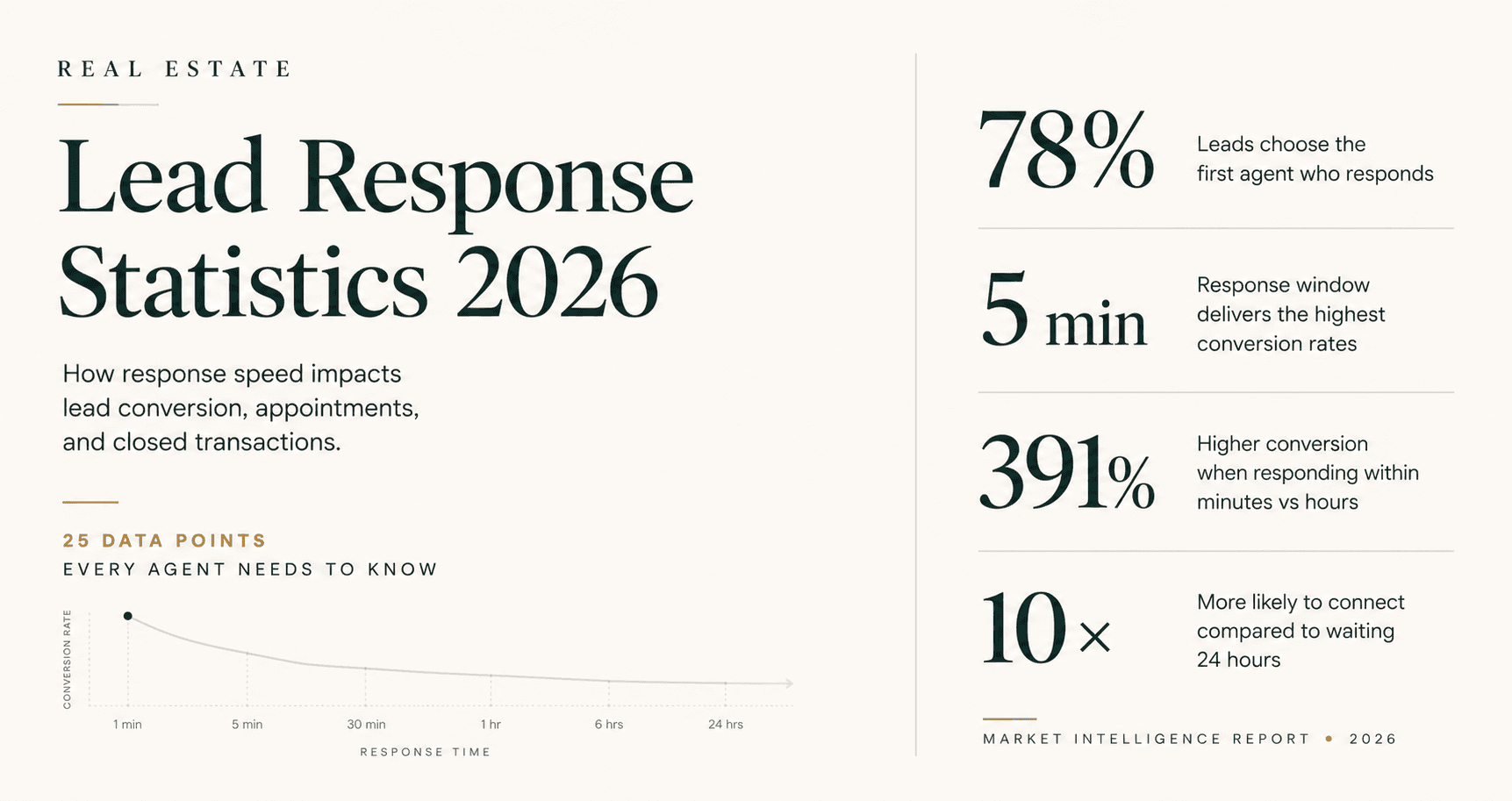
- Agents responding to leads within 5 minutes are 21 times more likely to qualify those leads than agents who wait 30 minutes, per the MIT and InsideSales.com Lead Response Management Study — making follow-up speed the single highest-leverage lever for closing one more deal per year.
- CRM automation reduces manual follow-up workload by 35–45% on average, per 2024 industry data from NextCTL's brokerage analysis — time that converts directly into additional prospecting capacity and, for the median agent, roughly one additional closing per year.
Emily Rogers, a five-year agent in Austin, Texas, closed 9 deals in 2024 and earned $61,000 gross before splits. She estimated she lost 3 appointment-ready leads that year — not to competitors with better listings or lower fees, but to slow follow-up. One lead asked to see a home at 9pm and received a response at 10am the next day; by 9:05pm the previous evening, the same buyer had already texted two other agents. One of those agents closed the transaction for a $13,400 gross commission. Emily's loss wasn't a market problem. It was a systems problem.
This article runs the actual math on what one additional closing per year is worth — not just the immediate commission, but the compounding referral value over 36 months. You'll also see how that value scales differently depending on your market tier, how the NAR settlement has shifted commission math, and what the specific behavioural gaps are that cost median-producing agents one or two deals per year without them realising it.
The basic math
Start with what the median agent actually earns per transaction. According to NAR's 2025 Member Profile — which surveyed members on their 2024 business activity — the median Realtor closed 10 transaction sides and earned $58,100 in gross commission income. That's approximately $5,810 per side before brokerage splits and before the median $8,010 in annual business expenses. Net income after taxes and expenses came to $36,600, giving the median agent a net-to-gross ratio of about 63 cents on every dollar earned before accounting for self-employment tax.
Commission rates have shifted since the August 2024 NAR settlement, but not as dramatically as many predicted. Clever Real Estate's 2025 agent survey of 533 agents across all 50 states found the national average total commission at 5.44% — up slightly from 5.32% in 2024 — split between a listing agent average of 2.77% and buyer's agent average of 2.67%. On the national median sale price of $405,400 (per Agentsorted's 2026 commission analysis using Zillow Home Value Index data), a single buyer-side commission at 2.67% generates $10,824. A seller-side commission at 2.77% generates $11,230. The midpoint — one additional closing at the national average commission rate — is roughly $11,000 in gross commission per side.
Stat: The median Realtor closed 10 transaction sides in 2024 with a median sales volume of $2.5 million and earned $58,100 gross — approximately $5,810 per side before splits and expenses. — NAR 2025 Member Profile
After a standard 70/30 brokerage split, the agent's take from an $11,000 gross commission is $7,700. After self-employment tax (15.3% on net) and federal income tax at the 22% bracket, the agent keeps approximately $5,400–$5,900 per additional closing in actual take-home. That is the floor number — and it is already meaningful. But the ceiling of one additional closing's value is far higher when you account for the referral and repeat business it seeds. The immediate commission is only the first chapter.
The compounding effect of one extra closing
Every closing is a seed, not a harvest. NAR's 2025 Member Profile found that repeat clients and referrals account for 41% of the average agent's total business — 20% from repeat clients and 21% from referrals from past clients. That means statistically, for every 10 closings you complete today, 4.1 of your future closings will originate from that group. One additional closing this year has a probabilistic tail value of 0.41 additional future deals — and those future deals carry their own 41% referral multipliers.
For agents with 16 or more years of experience, this ratio tilts further: NAR data shows 40% of experienced agents say repeat clients make up more than half their business, with referrals accounting for 28% of business for that cohort. The experienced agent's additional closing today seeds more future business per transaction than the newer agent's — because the sphere of influence is larger and the referral network is more entrenched. A single extra closing at year 10 of an agent's career is worth more in compounding value than the same closing at year 2, even if the gross commission is identical.
Run the 3-year compound: one additional closing this year at $11,000 gross generates $7,700 after split. That client has a 41% probability of producing a referral or repeat transaction within 3 years, worth another $7,700 after split. The referred client has a 41% probability of producing another, worth roughly $3,157 in expected value. Add these together: the 3-year expected value of a single additional closing — on a probability-weighted basis — exceeds $18,000 in gross commission from that one relationship thread alone. This is why the question isn't just "what does one closing pay me today?" but "what does one closing pay me across three years?"
Stat: Repeat clients and referrals accounted for 41% of the average agent's business in 2024 — 20% from repeat clients and 21% from referrals from past clients and customers. — NAR 2025 Member Profile
The compounding effect also makes the cost of a missed closing far higher than most agents calculate. Emily's lost Austin deal wasn't just $13,400 in gross commission she didn't earn. It was the referral chain that buyer would have sent — statistically 0.41 deals over the next 3 years. It was the online review they didn't leave. It was the neighbour they talked to at the closing table who will never know Emily's name. Missed closings don't disappear; they compound for someone else.
The real cost of not automating
The most common cause of missed closings among median-producing agents isn't lead volume — it's follow-up latency. Research from MIT and InsideSales.com (the Lead Response Management Study, Dr. James Oldroyd) found that companies contacting leads within 5 minutes are 21 times more likely to qualify those leads than companies that wait 30 minutes. The Harvard Business Review's 2011 analysis of the same data set found that companies responding within one hour were 7 times more likely to qualify than those waiting two hours, and 60 times more likely than those waiting 24 hours. Real estate agents average 15 hours to first response, per NAR benchmark data cited in Apten's 2026 speed-to-lead analysis — operating at the far end of the decay curve on nearly every inbound lead.
The practical impact of this latency is measurable. Velocify's research found that calling a lead within one minute of inquiry produces a 391% improvement in contact rate compared to calling after two minutes. At 15 hours average response, the median agent is not competing for leads — they are inheriting whatever leads their competitors declined. The agents who are closing 20+ deals per year are not necessarily getting more leads. They are responding faster and following up more consistently. According to 2024 industry data from NextCTL's brokerage analysis, CRM automation reduces manual follow-up workload by 35–45% for agents, and agencies implementing AI-powered CRMs typically see 15–25% increases in conversion rates within the first quarter.
Manual follow-up also degrades in quality as volume increases. An agent managing 12 active leads simultaneously cannot write a personalised first email to each, remember each lead's search criteria three weeks later, or reliably call back on the agreed-upon day. These are not failures of effort — they are failures of system capacity. The specific manual tasks that automation replaces include: sending the first acknowledgment within 60 seconds of lead capture, firing a property alert the day a new listing matches a lead's saved criteria, scheduling a check-in call 7 days after an initial showing, and logging all call and email outcomes to a unified contact record. Each of these, done manually at scale, consumes 45–90 minutes per week per 20 active leads — time that is not spent prospecting, showing, or closing.
ROI by agent tier
One additional closing means something different depending on where you sit in the production curve. NAR's 2025 Member Profile breaks this down precisely by experience tier. Agents with 2 years or less of experience closed a median of 3 transactions in 2024 for a median sales volume of $500,000 and earned $8,100 gross. For this group, one additional closing at the national median commission rate adds roughly $11,000 gross — a 136% increase in annual commission income. The ROI on any tool or system that reliably produces that result is essentially uncalculable.
Mid-career agents in the 6–15 year experience bracket had the highest production of any tier: 11 transaction sides for $3.2 million in volume. Their per-side average is roughly $7,900 gross (above the national median because experienced agents tend to work higher-priced homes). One additional closing adds $7,900–$13,000 gross depending on market, before splits. For agents in this bracket earning $78,900 (the median for 16+ year veterans, per NAR), adding one closing represents an 10–16% income increase — material but not transformative at the single deal level. The compounding tail value is what makes it significant: for agents with large spheres, that one extra closing seeds 0.4+ additional future deals from a referral pool that is already highly productive.
For agents in high-value markets, the math tilts dramatically. In Northern Virginia, where the average sale runs $750,000, a buyer-side closing at 2.5% generates $18,750 gross — $13,125 after a 70/30 split. In San Francisco or Manhattan, a single closing can generate $25,000–$40,000 on a single transaction side. The 3-year expected value of one additional closing in these markets, with the referral chain applied, routinely exceeds $50,000 in probability-weighted commission. This is why top producers in expensive markets become so dominant so quickly: each closing compounds into future closings at a rate that condo markets can't replicate.
12-month projection
The 12-month projection for an agent adding one additional closing through improved follow-up systems looks like this, built on verifiable data. Assume a median-market agent with a 10-deal baseline, a $405,400 average sale price, and a 2.7% average commission per side. Current gross from 10 sides: $109,458. One additional side: +$10,946 gross, +$7,662 after 70/30 split, +$5,400–$5,900 net after taxes. Year 1 cash impact: roughly $5,500–$6,000 in additional take-home. Year 2 expected: 0.41 probability of a referral or repeat deal from the same client, adding $3,000–$4,500 in expected take-home. Year 3 expected: the referral's own referral chain adds another $1,200–$1,900 in expected value. Three-year expected take-home from one additional closing: approximately $9,700–$12,400.
Now compare that to the cost of the tool or process change that enables it. The median Realtor spent exactly $60 on website maintenance in 2024, per NAR's 2025 Member Profile — a figure that illustrates how dramatically underinvested most agents are in digital infrastructure. Agents who add a CRM with automated lead routing and follow-up sequences typically spend $300–$500/month. At $4,800/year against a 3-year expected return of $9,700–$12,400 from one additional closing, the break-even is less than one deal — and one additional deal per year is a conservative expectation for any agent who currently has no automated follow-up and is responding to leads at the industry average of 15 hours. Pinova's platform routes leads by source at capture, fires immediate SMS and email acknowledgments, and triggers behaviour-based nurture sequences — handling the specific manual steps where most agents lose the one deal they can't see slipping away.
The agents who reach 20, 30, or 50+ closings per year are not doing more prospecting hours than median agents. According to NAR's 2025 Member Profile, the typical Realtor works 35 hours per week — the same regardless of production tier. The difference between 10 deals and 20 deals is almost entirely a systems difference: faster response, more consistent follow-up, better database organisation, and automated touches between conversations. Each of those four variables is automatable. None of them require working more hours. They require different hours — or no hours at all if the right tools handle them.
What to do with this information
The highest-leverage change most median-producing agents can make is not adding a new lead source. It is fixing response time on their existing leads. If you are currently responding in hours, dropping to sub-5-minute response on all new leads — using an AI acknowledgment message if necessary — will produce more closings from your existing pipeline than any additional marketing spend. The MIT research is unambiguous: at the 5-minute mark, you are 21 times more likely to qualify than at 30 minutes. At 15 hours — the industry average — you are effectively not in the race. This is not a marginal difference. It is the difference between being a competitor and being background noise.
The second change is a structured 30-day follow-up sequence for every new lead, regardless of their stated timeline. Industry analysis shows 87% of deals are lost due to poor follow-up, not poor initial contact. A lead who says they're "just looking" in January statistically makes a purchase decision within 6–18 months — and the agent who stays in contact every 2–3 weeks with relevant listings and market updates is overwhelmingly more likely to get that call than the agent who called twice and stopped. A six-email sequence costs nothing to automate and typically recovers 1–2 deals per year from leads that would otherwise have gone silent.
The third change is database maintenance. NAR data shows the average agent earned 20% of their business from repeat clients in 2024. For agents with 5+ years of transactions behind them, a contact database of 200–400 past clients and sphere contacts — touched once per month by email and once per quarter by a personal note or call — is statistically enough to generate 2–3 additional closings per year from that group alone, without any additional prospecting or lead spend. The agents who are not doing this are leaving compounding value on the table every month it goes unaddressed. Start with whoever closed in the last 24 months, send one genuine check-in this week, and build the routine from there.
| Key Statistic / Finding | Source & Year |
|---|---|
| Median Realtor closed 10 transaction sides in 2024 and earned $58,100 gross — approximately $5,810 per side | NAR 2025 Member Profile |
| Net income for the median Realtor after taxes and expenses: $36,600 in 2024, unchanged from 2023 | NAR 2025 Member Profile |
| National average total real estate commission: 5.44% in 2025, split 2.77% listing / 2.67% buyer-side | Clever Real Estate Agent Commission Survey, 2025 |
| Repeat clients and referrals account for 41% of the average agent's business — 20% repeat, 21% referrals | NAR 2025 Member Profile |
| Agents contacting leads within 5 minutes are 21 times more likely to qualify those leads than agents who wait 30 minutes | MIT and InsideSales.com Lead Response Management Study (Dr. James Oldroyd) |
| Calling a lead within 1 minute of inquiry produces a 391% improvement in contact rate vs. calling after 2 minutes | Velocify Lead Response Research |
| Real estate agents average 15 hours to first lead response — operating at the far end of the contact probability decay curve | NAR benchmark data cited in Apten Speed-to-Lead Benchmarks 2026 |
| CRM automation reduces manual follow-up workload by 35–45%; agencies using AI-powered CRMs see 15–25% conversion rate increases within the first quarter | NextCTL Brokerage CRM Analysis, 2024 |
| Agents with 16+ years of experience: 40% say repeat clients make up more than half their business; referrals account for 28% of income | NAR 2025 Member Profile |
| New agents (2 years or less) closed a median of 3 transactions for $500,000 in volume and earned $8,100 gross in 2024 | NAR 2025 Member Profile |
| Median Realtor spent $60 on website maintenance in 2024 — the smallest expense category in the NAR Member Profile | NAR 2025 Member Profile |
Frequently Asked Questions
How much does a real estate agent make per transaction in 2025?
Based on NAR's 2025 Member Profile, the median Realtor earned $58,100 gross in 2024 from 10 transaction sides — approximately $5,810 per side at the median. However, that figure reflects the national median commission on the national median sale price. At the current national average commission of 2.7% per side (per Clever Real Estate's 2025 data) on the median sale price of $405,400, one side generates roughly $10,900–$11,200 in gross commission before brokerage splits. After a 70/30 split, the agent nets approximately $7,600–$7,800 per closing, before taxes and business expenses.
What is the value of one additional closing per year for a real estate agent?
The immediate value is approximately $7,600–$7,800 in agent take-home after a 70/30 split, or $5,300–$5,900 after estimated taxes, at national median commission rates. But the 3-year expected value is significantly higher: NAR's 2025 Member Profile shows 41% of the average agent's business comes from repeat clients and referrals. Applying that multiplier, one additional closing today is expected to seed 0.41 additional future deals — adding roughly $3,000–$4,500 in expected future take-home on top of the immediate commission. The 3-year probability-weighted value of one additional closing ranges from $9,700 to $12,400 in take-home for median-market agents.
How many deals does the average real estate agent close per year?
According to NAR's 2025 Member Profile, based on 2024 transaction data, the median active Realtor closed exactly 10 transaction sides with a median sales volume of $2.5 million. Production varies sharply by experience: agents with 2 years or less closed a median of 3 sides; agents with 6–15 years closed 11 sides (the highest production tier); and agents with 16+ years closed 10 sides at higher average prices. These figures are for active NAR members — the full universe of licensed agents in the US includes many part-time or inactive license holders whose production is significantly lower.
How does lead response time affect real estate agent income?
Dramatically. Research from MIT and InsideSales.com found that agents and companies contacting leads within 5 minutes are 21 times more likely to qualify those leads than those who wait 30 minutes. Velocify's research found calling within 1 minute produces a 391% improvement in contact rate versus calling 2 minutes later. Real estate agents average 15 hours to first lead response according to NAR benchmark data — meaning the typical agent is competing at the worst possible point on the contact probability curve. For a median agent losing one deal per year to slow follow-up, fixing response time alone can add $10,000–$13,000 in annual gross commission.
Is a real estate CRM worth it for a solo agent?
Yes, for most solo agents producing 5 or more deals per year. CRM automation reduces manual follow-up workload by 35–45%, per 2024 industry data, freeing time for prospecting and showing. Agencies using AI-powered CRMs typically see 15–25% increases in lead-to-appointment conversion within the first quarter. For a solo agent at the median 10 deals per year, even a 10% conversion improvement produces one additional closing — worth $10,000–$11,000 in gross commission at national median rates. Most real estate CRMs cost $300–$500/month ($3,600–$6,000/year), making the break-even point less than one additional closing per year.
How much did the NAR settlement change real estate agent commissions?
Less than many predicted. The August 2024 NAR settlement banned blanket buyer-agent compensation on MLS platforms and required written buyer-broker agreements before home tours. However, Clever Real Estate's 2025 agent survey found the national average total commission rose to 5.44% in 2025 — actually up from 5.32% in 2024. Buyer-agent commissions have remained around 2.4–2.67% on average. Redfin's survey data found that most sellers still opt to cover the buyer's agent fee. The primary practical impact has been more documentation and negotiation transparency, not a dramatic compression of commission rates for well-positioned agents.
What is the highest-leverage thing a real estate agent can do to close one more deal per year?
Fix response time first. The MIT and InsideSales.com Lead Response Management Study is the most cited and most replicated finding in sales research: responding within 5 minutes makes you 21 times more likely to qualify a lead than waiting 30 minutes. For real estate agents, whose average first response is 15 hours, this represents an enormous recoverable opportunity. After response time, the second-highest-leverage activity is systematic 30-day follow-up for all new leads — the majority of deals lost to poor follow-up happen between day 3 and day 30, not at the initial contact. Third: contact your database from the past 24 months. NAR data shows 41% of the average agent's business comes from repeat clients and referrals, and most agents are underinvesting in staying in contact with the people who already know and trust them.
📚 Related Reading
- The real estate tech stack audit: what the top 1% of agents actually use in 2026
- What buyers and sellers actually search before choosing an agent (keyword data study)
- How Google AI Overviews are changing real estate search — and which agents will win
- Real estate AI adoption report 2026: how agents are using automation to close more
Ayushman Singh
— Co-Founder & Chief Brand & Marketing OfficerAyushman Singh is the co-founder and Chief Brand & Marketing Officer of Pinova. He shapes the narrative, builds the brand, and tells the stories the industry doesn't want to hear. He believes the real estate system was designed to extract from agents, not empower them — and he's building the counter-narrative.